
Investment management Investment portfolio
Using research-driven asset allocation, thoughtful investment selection and ongoing portfolio management, we build portfolios designed around your goals, risk tolerance and long-term priorities.

Building and managing your portfolio
Your investment portfolio should be built around the life you're planning for. Whether you're preparing for retirement, preserving wealth, generating income or pursuing long-term growth, your portfolio should reflect your goals, time horizon and comfort with risk.
Our portfolio construction process combines economic research, strategic asset allocation and disciplined investment selection to create a diversified portfolio tailored to your needs. Every investment decision is made within the context of helping support your financial objectives while navigating changing market conditions.
A personalized portfolio strategy
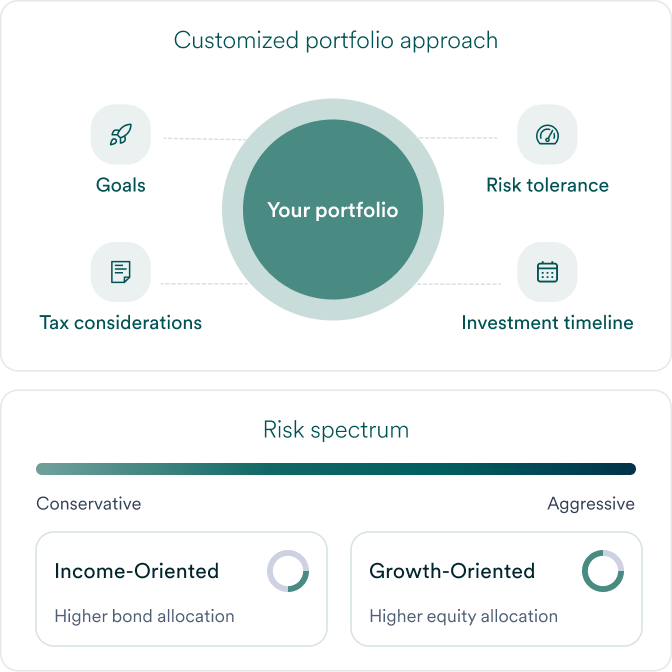
No two investors have identical goals. That's why we begin with understanding what matters most to you. We evaluate factors such as your financial objectives, risk tolerance, investment timeline and tax considerations before developing a personalized strategy for your investment portfolio.
Guided by our asset allocation research and investment selection process, we construct portfolios using investments that work together to pursue long-term objectives while helping manage risk through changing market conditions.
Depending on your goals, your portfolio may emphasize growth, income generation, wealth preservation or a combination of priorities.
Ongoing portfolio management
Building a portfolio is only the beginning.
As markets change and life evolves, your portfolio should adapt as well. Our investment professionals continuously monitor portfolios and evaluate opportunities to help keep your strategy aligned with your goals.
We look for opportunities to:
Recalibrate
Address market movements that may affect intended asset allocation targets.
Refresh
Evaluate new investment opportunities that may strengthen portfolio positioning.
Rebalance
Adjust portfolio exposures to maintain appropriate alignment with your goals, time horizon and risk tolerance.
Supported by research. Focused on your future.
Behind every portfolio is a team of investment professionals conducting economic research, evaluating investment opportunities and monitoring market developments.
Your wealth professional works alongside these investment professionals to help ensure your portfolio remains aligned with your objectives while adapting to changing market conditions.
Annual portfolio reviews help confirm that your investment strategy continues to reflect your goals and evolving needs.


Incorporating your values into your portfolio
For investors who want their portfolios to reflect personal beliefs and priorities, impact investing can be incorporated into the portfolio construction process. This approach extends beyond financial considerations by evaluating environmental, social and governance (ESG) factors alongside traditional investment criteria.
Through thoughtful portfolio design, investors can align personal values with long-term financial objectives.
Your portfolio. Designed around your goals.
A successful portfolio requires more than investment selection alone. It requires a disciplined process that brings together asset allocation, research, portfolio construction and ongoing management.
Connect with a wealth professional to discuss a personalized investment strategy built around what's most important to you.
Explore our news and insights

Market news
Read our up-to-date reports on economic events and news from the markets.

Investing insights
Discover trends and ideas that may impact your investing strategy moving forward.

When to rebalance your portfolio
Whether you’re an active investor or passive, hands-off investor, knowing how and when to rebalance your portfolio should play a key role in your long-term investment strategy.