
Capitalize on today's evolving market dynamics.
With changes to taxes and interest rates, it's a good time to meet with a wealth advisor.

Because your approach to impact investing reflects your personal values, it’s unique to you.
Investors today can put money to work in ways that seek to make a positive impact without sacrificing the potential for competitive returns.
Selecting investments that have clearly identified intentions related to environmental, social and corporate governance (ESG) considerations, aligns your values and investments.
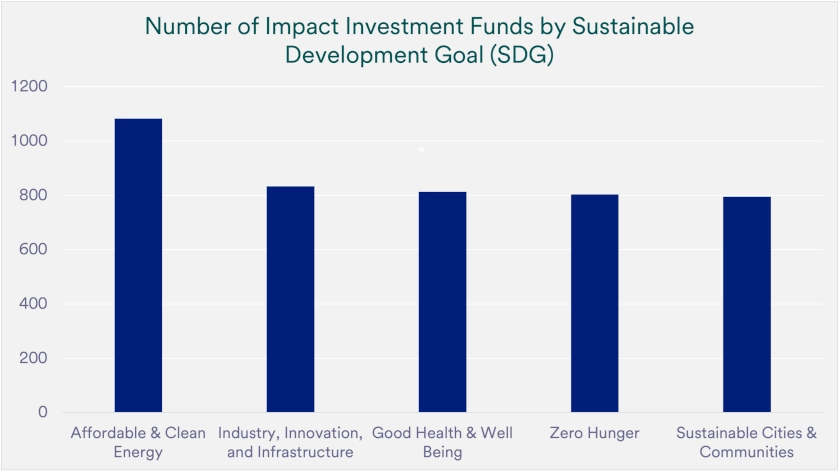
Some investors express strong interest in investing to affect global change, an approach often referred to as impact investing. Typically, this approach centers on investments selected with an emphasis on their environmental, social and corporate governance (ESG) objectives.
The size of the worldwide market for impact investments is estimated at more than $1.6 trillion. 1 “It’s possible for investors to build a diversified portfolio and follow broad ESG mandates,” says Rob Haworth, senior investment strategy director with U.S. Bank Asset Management. “It’s a decision that goes back to the personal tastes of the investor.”
As you consider impact investing, it’s important to understand the opportunities as well as other considerations that may affect your decision.
Impact investing is an investment made with the intention to generate a measurable, positive social and environmental impact alongside a financial return. 2 “Stated simply, it’s putting your money to work in a manner that reflects your values,” says Chad Burlingame, head of impact investing for U.S. Bank Asset Management Group.
“Once you’ve identified what values you want to align with your money, we can identify the most effective ways to incorporate impact investing into your portfolio strategy.”
Chad Burlingame, head of impact investing at U.S. Bank
No two investors will have the same approach to impact investing, but you can now find investment opportunities aligned with your values as a result of expanding product availability. Many mutual funds and exchange-traded funds (ETFs) offer a variety of ways for individuals to participate in this marketplace. You can also find impact investments in private market equity or debt. In fact, it’s now possible to broadly diversify your entire portfolio – across a range of asset classes – through impact investments.
“In the real world, the definition of ‘impact investing’ is very much unique to each person,” says Burlingame. “Once you’ve identified what values you want to align with your money, we can identify the most effective ways to incorporate impact investing into your portfolio strategy.”
Following very strong flows of money into the ESG market from 2019 to 2021, investor capital flows have turned negative over the past three calendar years. 3 Still, rising electricity demand tied to the growth of artificial intelligence (AI) helped drive inflows into some sustainable funds focused on clean energy companies. “The numbers indicate a lack of momentum toward ESG investing, which existed earlier,” says Haworth. “We’re now watching to see what will be the next driver of increased ESG interest.” A recent survey shows ESG remains popular with younger investors, with 97% of Millennials indicating they are interested or somewhat interested in sustainable investing. 4
ESG investing looks at three dimensions of a company:
Impact investing also seeks to support the efforts of businesses and organizations to complete projects aimed at having a positive benefit on society. A precursor to ESG and impact investing was socially responsible investing (SRI). This approach primarily focused on eliminating certain investments that did not match the investor’s ethical guidelines. A common example would be the avoidance of investing in stocks of tobacco companies.
When determining your own impact investing objectives, you can choose from two primary options:
The lack of performance history makes it difficult to definitively state that an impact focus outperforms other investment styles. Yet a recent survey shows that 72% of respondents reported that their investments met or exceeded their financial expectations. The majority of them (79%) indicated they expected to earn risk-adjusted, market-rate returns. In addition, 90% said their investments met or exceeded impact targets. 1
While the number of available options claiming to meet the definition of impact investing has ballooned, to accomplish your specific objectives, a thorough assessment is required to clearly identify a fund’s ESG intentions. Most important is to sort through false promises and misleading claims, a concept broadly referred to as “greenwashing.” This term describes a company executive or investment manager conveying a false impression or providing misleading information about the merits of impact in its products or services.
“Funds must have a proven intention and ability to deliver on their impact investing objectives over an extended period of time,” says Burlingame. “Measuring the ‘non-financial’ benefits of an investment (its success in making an impact) can be more complex than measuring the financial return of an investment. Some aspects of ESG performance are easier to measure than others.”
Some environmental measures have become more readily available, such as a company’s carbon output data, now voluntarily disclosed by more than 21,000 firms globally. 5 However, substantive information about gender diversity in a company’s workforce or other social governance metrics are less publicly accessible. In addition, impact ratings from the investment research firm Morningstar only date back to 2016. These factors make the investment selection process more challenging.
Professional guidance can help. Burlingame notes, “The process for identifying the right impact investments requires a combination of qualitative and quantitative analysis. As the industry evolves, new investment alternatives arise and the need for careful assessment becomes even more pronounced.”
A few examples of impact investing include:
Investors interested in impact investing as a type of investing strategy want to see their money both grow and deliver non-financial benefits to society and the environment.
According to a survey by the Global Impact Investing Network, 72% of respondents reported that their financial expectations were met or exceeded. The majority of them (79%) indicated their expectation was to earn risk-adjusted, market-rate returns.
An area to keep eye on may be the infrastructure buildout for renewable energy. Rising electricity demand tied to the growth of AI helped drive inflows into some sustainable funds focused on clean energy companies. While it’s still in the early stages, it will have both environmental benefits and may offer compelling returns for long-term investors.
Impact investing has a specific definition, but it can also be used as the umbrella term to capture the myriad of investment approaches, including environmental, social and governance (ESG) and socially responsible investments (SRI).
The ultimate objective of impact investing is for you to feel comfortable that the money you’re investing is designed to “do good” over the long run. You can meet investment goals by focusing on organizations that mitigate risks or seek to solve today’s environmental, social or governance challenges. Your values can be meaningfully incorporated into your investment strategy.
Companies worldwide may misrepresent their green credentials to deceive investors and consumers for economic gain or public favor.
Let us help you craft a portfolio that reflects your goals, time-horizon and values.


 Equal Housing Lender. Deposit products are offered by U.S. Bank National Association. Member FDIC. Mortgage, Home Equity and Credit products are offered by U.S. Bank National Association. Loan approval is subject to credit approval and program guidelines. Not all loan programs are available in all states for all loan amounts. Interest rates and program terms are subject to change without notice.