
STORIES
Outsourced chief investment officer services market has grown exponentially
July 25, 2025
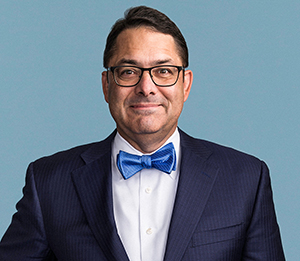
Jim Link, head of the outsourced chief investment officer business for U.S. Bancorp Asset Management, talks about how his team, and the industry, has changed
As markets have grown more volatile and regulatory requirements more complex, there has become a need for some organizations to outsource their chief investment officer needs. In fact, the outsourced chief investment officer (OCIO) business has grown exponentially.
According to data compiled by Cerulli Associates, U.S. assets managed by OCIO providers reached $2.9 trillion by year-end 2023 and, according to Cerulli’s latest projections, will reach $4.2 trillion by year-end 2028, reflecting an average annual growth rate of 7.9%.
Jim Link, head of OCIO for U.S. Bancorp Asset Management, Inc., recently discussed the changes he’s seen in the industry, how they’ve affected his OCIO team and what he anticipates the landscape could look like over the next three years.
It’s been three years since your OCIO group joined U.S. Bancorp Asset Management as part of the PFM Asset Management acquisition – how has your team changed in that time?
We went from being a smaller team at a boutique firm to a much larger team, one with a broad diversity of expertise and access to all the offerings of our affiliates within the fifth-largest commercial bank in the U.S.
At the time of the acquisition in 2021, PFM Asset Management had $20 billion in assets under management. As of March 31, we are at $36.1 billion and ranked as the 18th largest U.S. OCIO provider by Pensions & Investments.1
We’ve been busy increasing technology and operations capacity to better serve our current clients and to attract new and more complex clients. We’ve also expanded our personnel and investment resources by integrating the U.S. Bank legacy Institutional Asset Management team and adding personnel from Highmark Capital Management via the MUFG Union Bank acquisition.
We recruited a number of senior leaders to help us serve specialized clients. Michael Kelly and Chris Reynolds bring their expertise in endowments and foundations. Michael Murray brings a deep OCIO business development officer background to our Midwest and National sales efforts. We’ve significantly increased the size of our investment specialists team and have added client portfolio manager roles to support larger, more complex clients.
How has the industry changed over the last few years?
For years, we talked about the specter of consolidation, and we’ve finally seen it start to occur, with several smaller boutique OCIO firms merging with larger financial institutions. Companies are realizing they can’t be everything to everyone. They need to scale technology and people resources, and capital is scarce – so they’re making tough decisions on where they want to focus their business and where they’re going to deploy their limited resources to maximize growth. Consolidation can alleviate those concerns and allow providers to offer a holistic and deeper set of resources to support the client.
What are the advantages to moving from a more boutique OCIO firm to a larger organization affiliated with U.S. Bank?
U.S. Bank clients benefit in many ways. The breadth of products and services is vast; if a client has a financial need, there is a product or service within the bank’s organization to fill that need. It’s great to have interconnectivity with rest of organization and it’s inspiring that all 70,000 team members are working toward the same thing – the success of our clients. Another key advantage is our risk management infrastructure. Fraud and cyberattacks are the biggest risk at any financial services firm and as a larger organization, our organization invests in the optimal security talent and technology for our clients.
What current trends are you seeing in the OCIO space?
Clients are becoming more diverse in terms of the type and size of clients looking for an OCIO. They also have a better understanding of what an OCIO does and how it can benefit their organization. OCIO providers are seeing pricing pressures, which is a hallmark of a maturing market.
There’s a lot more structure around OCIOs. For example, the CFA Institute has created Global Investment Performance Standards (GIPS) standards, meant to create a foundation for calculating and presenting investment performance based on the principles of fair representation and full disclosure. This is great for clients as it gives them an apples-to-apples way to compare OCIO offerings. In the early days of a new offering, it’s a little like the wild west – caveat emptor. It can feel risky and intimidating. As things mature, are given some structure and become more mainstream, it makes the product and service offerings attractive to more prospective clients and that’s what is happening with OCIO. U.S. Bancorp Asset Management, Inc. was an early adopter of maintaining composites and we’ve long been a champion of creating standards within the industry.
One of the most significant considerations among foundations, endowments and not-for-profit organizations is the potential impact of policy changes on taxation and funding. Whether it be the potential for reduction or elimination of support from Washington, D.C. or significant tax changes, foundations, endowments and nonprofits are settling in for some possibly significant changes that may impact the way they invest. From our perspective, there are some big higher-education endowments selling private assets, which may be a precursor to an overall decrease in illiquid assets in favor of more liquid assets.
What do the next three years look like for your team?
Demand for OCIO continues to grow, so scaling our business is critical – to better serve our current clients and attract additional or larger, more complex clients. We’re fortunate that U.S. Bank leadership is very supportive of our work and willing to invest in our business. We’re making technology investments, improving our reporting and trading capabilities to become more automated, and of course we’re always looking for ways to streamline processes to become more efficient. Demand for OCIO services is growing rapidly and we’re ready to engage with this influx of clients.
1Pensions & Investments annual OCIO rankings, ranking reflects U.S. Bancorp Asset Management, Inc. by total U.S. institutional assets under management as of March 31, 2024.
U.S. Bancorp Asset Management, Inc. is a registered investment adviser, a direct subsidiary of U.S. Bank National Association and an indirect subsidiary of U.S. Bancorp. U.S. Bank is not responsible for and does not guarantee the products, services, or performance of U.S. Bancorp Asset Management, Inc.
Media center
Press contact information, latest news and more
Learn more
Company facts, history, leadership and more
Work for U.S. Bank
Explore job opportunities based on your skills and location
 Equal Housing Lender