

U.S. Bank appoints MUFG and Citi as sub-custodians for Asia-Pacific markets
The markets included in this move are Japan, Indonesia, Malaysia, Thailand and Vietnam.
STORIES
December 4, 2025
Josh Jacobs, chief commercial officer of exchange traded funds, has worked in the field for 20 years and describes 2025 as the ‘golden era’ for new fund launches
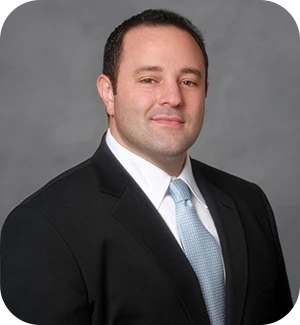
Josh Jacobs started working in exchange traded funds (ETFs) decades ago, when few investors knew what they were and instead opted for better-known mutual funds. Today, ETFs are among the most popular investments, with U.S. ETFs taking in more than $1 trillion year-to-date, putting the market on track to set a new record of $1.4 trillion by the end of the year.
Jacobs is the chief commercial officer of ETFs at U.S. Bank, where he’s responsible for all of the client-facing and commercial components of the Global Fund Services ETF business. Jacobs, who joined the bank last year, is focused on increasing U.S. Bank’s revenue, market presence and overall profitability.
This year has been an unprecedented one on all fronts, he said: U.S. Bank is one of the most active fund servicers, helping to launch more than half of new ETFs so far in 2025 and servicing nearly half of all ETF issuers. The bank also tripled the number of ETFs it services in Europe.
Jacobs recently sat down to talk about why ETFs are gaining popularity now and how U.S. Bank is providing a differentiated experience for our Global Fund Services clients.
Institutional asset managers are rolling out new ETFs at a record pace this year and converting mutual funds to ETFs. What are the advantages of an ETF over a mutual fund, and why are they taking off now when they’ve existed for some time?
The main advantages are increased tax efficiency, transparency and liquidity – ETFs can be traded throughout the day. ETFs are often, but not always, cheaper than a mutual fund running the same strategy. Over time, those advantages and the innovative product strategies available in the ETF wrapper have driven consumer demand for ETFs.
Is there a particular fund category that is leading the pack?
Originally, there were only passive ETFs, but over the past few years we’ve seen an explosion of active ETF fund launches, where the manager actively selects securities to achieve performance, as opposed to tracking the performance of an index in a passive ETF.
These active ETFs often utilize sophisticated investment strategies that weren’t previously available to retail investors. You’re seeing currency hedging and buffering, and long/short positions in stocks.
An area we’re seeing a lot of demand for in active ETFs is fixed income and products that were previously only available to high-net-worth investors via hedge funds. People are democratizing some of those asset classes and strategies, and putting them into an ETF. This allows investors to take advantage of the increased liquidity of ETFs while still getting a similar return along the lines of a hedge fund.
Do you think this is the year when you no longer need to explain at backyard BBQs – or other areas in your life where you talk to people who aren’t in the finance industry – what an ETF is?
I’ve worked in ETFs for over 20 years and when I first started many people thought I worked with electronic fund transfers, like ACHs (automated clearing houses).
It wasn’t like I had some brilliant idea that ETFs were going to take off; I was young and my salary was cheap and I happened to work at one of the first ETF issuers. They just needed a body to throw at the ETF business to figure it out.
Now, I’ve been in the industry for more than two decades and have a lot of experience in ETFs, both on the issuer and service provider side. I happened to be in the right place at the right time, and I’m glad to say most people now know what an ETF is and don’t ask me about fund transfers anymore.
Have you ever seen a year like this in your career working in ETFs?
I’ve never seen a year like this in my career. There’s been an absolute explosion of ETF launches. U.S. Bank is taking an outsized percentage in the market, and I don’t anticipate that pace slowing down. I feel really fortunate to be working at U.S. Bank, a company that is really excelling in the ETF marketplace in the golden era of ETF launches.
To that point, what is U.S. Bank doing that really differentiates the bank in this market?
Global Fund Services is averaging roughly one ETF launch per day for our clients, and day by day that market share is growing.
There are approximately 4,300 ETFs in the U.S. and we service more than 1,000 of them, giving us about 25% of market share. We are the center of the ETF ecosystem and it’s an exciting time to be working here as we’re growing our presence and our revenue.
This growth allows us to invest in our people and our technology so we can improve our client experience.
Recent news
The markets included in this move are Japan, Indonesia, Malaysia, Thailand and Vietnam.

The new automated data collection process improves accuracy and reduces manual work.
 Equal Housing Lender