

How to stop spending money and free up your budget

4 types of budgets and how to use them


8-min. read
We all make money missteps. But some are easier to dodge than you think. Doom spending, forgotten subscriptions, BNPL — here’s how to fix your slip-ups and feel good about your finances again.
Emotional spending (including “doom spending”) can snowball fast; simple guardrails like spend alerts and “fun funds” help you stay in control.
“Soft saving” — only saving for short-term splurges — can stall long-term goals; automate small, steady transfers for the benefit of “future you.”
Hidden financial drains like subscription creep and “I’ll pay it later” fees are avoidable with regular account reviews and autopay.
Progress beats perfection: Limit BNPL to what you can track easily, prioritize paying down high-interest debt and celebrate small wins to keep momentum.
Sometimes, all it takes is a single purchase for your financial wellness to evaporate. For Maia L., 23, this purchase was a necklace on Etsy.
“I was having a rough day with classes, and it just felt good to buy something,” she says. “But it unlocked the floodgates.” For the next few months, she said yes to every opportunity to eat out with friends. When she was stressed, she bought a piece of candy or a new lip gloss. Before long, she had entirely drained her savings account. “The appeal of consumption is that it’s quick and easy, and a stand-in for all of the coping mechanisms you should be using to manage your stress.”
Like so many others, Maia became a victim of her own doom spending.
According to a recent Credit Karma study, more than half of Gen Z shoppers consider themselves emotional spenders, and more than two-thirds have accrued debt as a result. This, combined with the findings of the Harvard 2025 “Youth Poll” — that only 16 percent of Gen Z say they are doing well financially — shows that Gen Z can use a little help setting themselves up for future prosperity.
The good news is that many of the fixes are quite easy (almost as easy as clicking “buy” in a doom-spend spiral). Here are some common money mishaps and simple ways to avoid making them.
If you’ve engaged in doom scrolling, then you’re probably also guilty of doom spending, which is the act of impulsively buying things when you feel stressed about the state of the world or your own personal life. Doing so can prevent you from saving for the future — and in some cases, cause you to accrue debt.
Pro tip: Maia, who is in school to become an actuary, learned how to cope with stress by journaling and working through her emotions rather than spending. Try this or another activity that boosts endorphins (like going outside, listening to a funny podcast or moving your body).
Avoid money blunders with the U.S. Bank Mobile App.
When they were a junior in college, Mari W., 23, decided to say yes to a road trip with their roommates along the East Coast. Great memories, not-so-great for their bank balance. In an era of overwhelm, it’s easy to prioritize your mental health by living in the moment. But this can lead to soft saving — only saving for near-term wants instead of building longer-term cushions like retirement and emergency funds.
Pro tip: Reframe soft saving as kindness to future you. Automate a small weekly transfer into a high-yield savings account first, then budget for the fun. You’re still enjoying life, just not at the expense of tomorrow’s goals.
Ren M., 23, considers herself to be a penny pincher. “I’m pretty paranoid about saving,” she says. But she’s currently unhappy in her job as a teacher. To cope, she turns to takeout: “I hate cooking, and so it’s like, ‘Oh, I had a really horrible day at work, I deserve delivery.’”
Pro tip: Build a budget that anticipates emotions. Create a “takeout” or “treats” category so the behavior is planned, not panicked. If needed, make small trade-offs elsewhere (like trimming a streaming service), so your totals still balance.
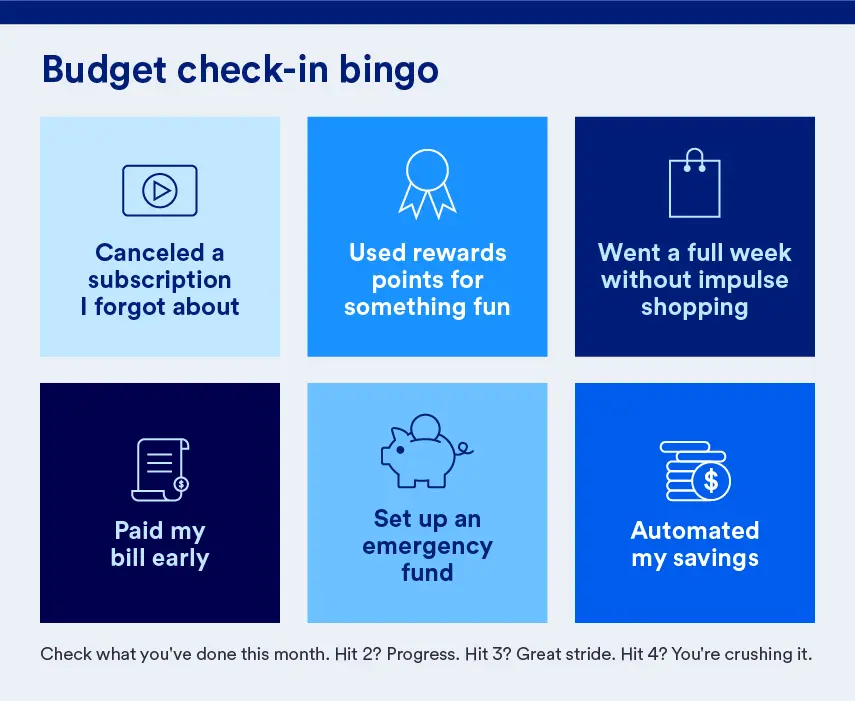
That “free trial” from three months ago? It’s charging you now — and you might not even notice. In fact, almost half of Gen Z consumers, who subscribe to an average of nearly seven services, lose track of what they’re paying for.
Pro tip: Use the U.S. Bank Mobile app to see recurring charges and cancel what you don’t use. Funnel the freed-up cash straight into a savings account. That $7.99 a month you used to put toward a streaming service adds up (and can earn interest).
Most Americans are exposed to thousands of advertisements a day. At that volume, the swipe-to-buy urge is real — even if you can’t actually afford whatever it is. The problem, of course, is that missed payments can mean late fees, and maintaining a balance leads to interest on the principal and potentially a dinged credit score.
Pro tip: Set up autopay or payment reminders with Bill pay so “later” never turns into “oops.”
You really want that latest upgrade to your gaming console. And due to the rise in Buy Now Pay Later (BNPL) apps and services, you feel like you can afford it. Or at least until the monthly payment is due and you realize it’s going to eat into your grocery budget.
Pro tip: BNPL services can be useful for planned, budgeted purchases. But before you opt in, understand what you’ll owe, when you’ll owe it and how you’ll pay it. It’s also a good idea to limit yourself to one BNPL purchase at a time so you can better track payments and avoid stacking due dates.
Ren is pretty good at saving money for month-to-month needs like rent and food. Like many people though, the money she sets aside may be sitting in an account chosen for convenience rather than growth.
When savings are kept in a low-interest account, they can lose purchasing power over time — especially during periods of inflation. While accessibility matters for near-term needs, even modest savings can sometimes benefit from being placed where they earn more.
Pro tip: Compare higher-yield options for any idle cash:
When you find the one that’s right for you, move what you don’t need for day-to-day spending over to that account, so your money works harder.
Adult life brings a lot of necessary expenses, which makes it easy to either ignore paying off debt or just pay the minimum. While that’s still progress, you may end up paying the bank far more in interest than the item cost in the first place.
Pro tip: Prioritize paying down high-interest balances first and use cash influxes from tax refunds, side hustles or bonuses to help knock down balances faster.
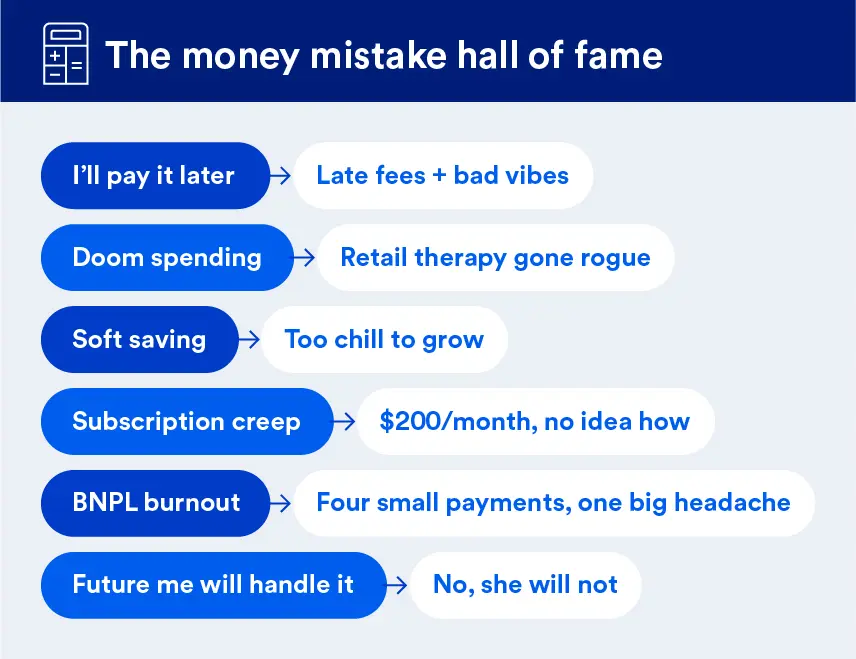
Thinking about your financial future can be stressful — and for many people, the instinct is to just avoid thinking about it altogether.
The risk is that putting off savings and emergency planning can leave you exposed when life happens — a wedding, a medical bill, moving apartments, you name it.
Pro tip: Future you is still you. Be kind to them. Set them up for success. Even if it’s just automating a $20 transfer to a savings account once a week. When you do, give “present” you a reward — a sweet treat, an hour of gaming or something else that feels like an indulgence. You can also make financial matters fun! Invite a friend over for a budgeting session, or challenge yourself to turn saving into a game (like seeing how much money you can free up in your budget in 30 minutes).
Financial FOMO is real. And often misleading. Influencer “luxury” is frequently financed or filtered.
Pro tip: Focus on your own milestones and progress — even if that’s just checking your credit score or reading some literature on debt consolidation. Or rethink the way you spend: Like so many others, Maia is prioritizing IRL experiences over scrolling.
Check your why and your pattern. If the purchase follows stress or bad news, and it’s becoming a reflex (not a planned line item), that’s doom spending. Add a small “Treats” budget and use spend alerts — now it’s a choice, not a spiral.
In your banking app, filter transactions by “recurring” or merchant name, then cancel in batches. Pro move: When you sign up for a trial, create a reminder for the renewal date on the spot.
Not inherently. It can help maintain cash flow for a planned purchase. Issues arise when multiple plans stack or when payments outlast the item’s usefulness. Limit to one plan at a time, sync due dates to your payday and track them in your budget.
Start with a small starter emergency fund (e.g., $250–$500), then target high-interest debt while making minimums on everything else. Keep a tiny, automated transfer to savings so the habit sticks, and increase it as debt falls.
Pick something achievable in 60–90 days — like $300. Automate $25/week, park it in a higher-yield account and watch your progress.
Do a 10-minute weekly glance (subscriptions, upcoming bills) and a deeper monthly review to adjust categories. Quarterly, renegotiate a bill or cancel a low-value expense for a quick win.
Consider a high-yield savings or money market account for easy access and better rates, or a CD if you won’t need the funds for several months.
 Equal Housing Lender