

Financial goals for this year: A 12-month planning guide

Here’s how to create a budget for yourself


6-min. read
Economizing is using what you have more efficiently, including your money, your time and your space. This guide shows you how to save smarter, live lighter and make every dollar go further.
Economizing isn’t about restriction — it’s about using your money, time and space more intentionally, so your life feels efficient and in control.
Track your patterns, cut waste, automate the essentials and redirect small savings toward goals that matter.
Managing your time helps your budget too: Batching tasks, planning ahead and reducing digital noise free up hours and lower everyday spending.
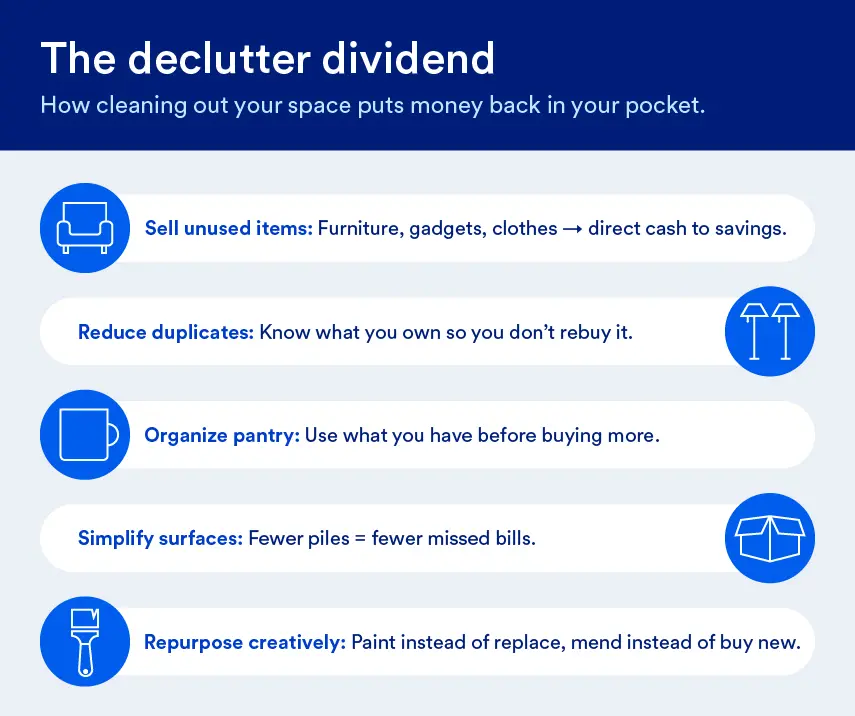
Also consider your space to help reduce stress and unnecessary costs: Decluttering helps you use what you already have, prevent duplicate purchases and even turn unused items into cash.
Economizing, at its core, means cutting back on spending. But that doesn’t mean cutting back on joy.
The word itself may seem a bit old-fashioned, but the concept is incredibly modern. It’s about learning to live well within your means by making thoughtful, incremental trade-offs — the kind that build confidence, reduce stress and help your money support the life you want.
Think of it like this: When you economize, you make sure every dollar, every minute and every square foot you already have is working harder for you, not against you.
This playbook breaks economizing into three parts — money, time and space — but these areas naturally spill into each other. Economize one, and the others get easier too.
To economize simply means to use your resources more intentionally and efficiently. It’s both a practice and a mindset: “Cutting back” becomes “optimizing,” and “tightening your belt” becomes “redirecting resources toward things that matter.”
Economizing might look different depending on where you are in life:
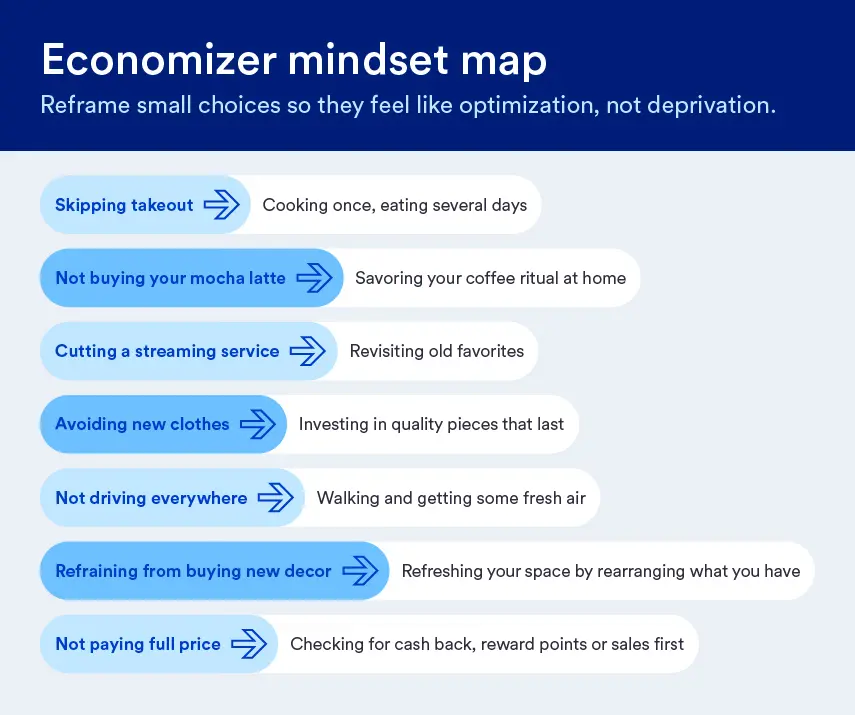
The first — and often easiest — place to start is your finances.
Economizing your money simply means creating a system that supports your life instead of complicating it. That might involve adjusting your spending, refreshing your budget or getting realistic about how much you can save each month.
Here are three questions to ask to understand where you are today — and where you want your money to go next.
To start economizing your money, focus on these key habits:
Economizing is about clarity and control, not sacrifice.
Frugal, not boring
Economizing doesn't have to feel restrictive—it can actually feel empowering.
Review subscriptions every three months.
Automate bill pay to avoid late fees.
Find free lor low-cost local activities.
Shop secondhand or swap with friends.
DIY instead of buying (think cleaning supplies, gifts, wardrobe refreshes).
Cook big portions and freeze batches for later.
There’s no universal “correct” amount, but many people aim for 20 percent of their take-home pay, which fits the 50/30/20 framework:
If 20 percent isn’t realistic right now, economizing helps you work up to it gradually. Start with 5 percent or 10 percent.
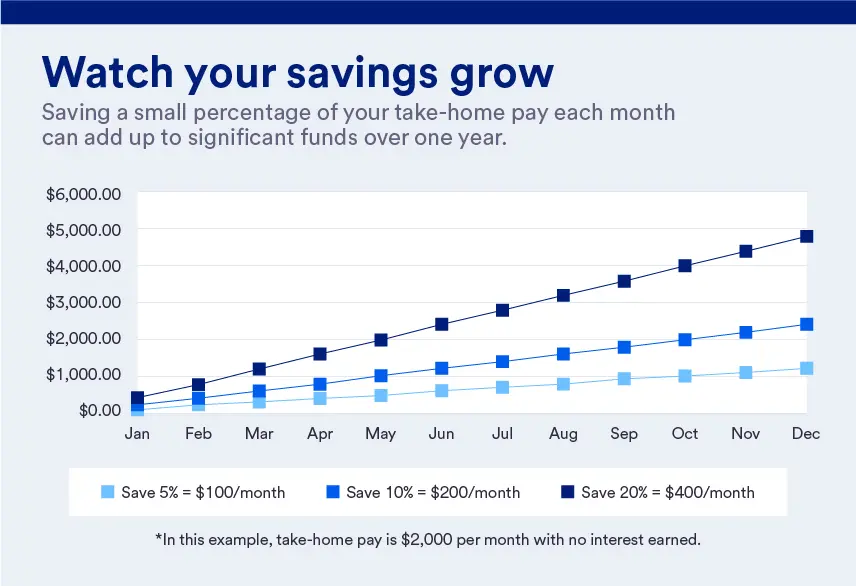
Fast doesn’t mean chaotic. You want changes that stick. But if you need to free up cash quickly and efficiently, these tactics can help:
Put your economizing wins to use with a U.S. Bank Smartly® Savings account.
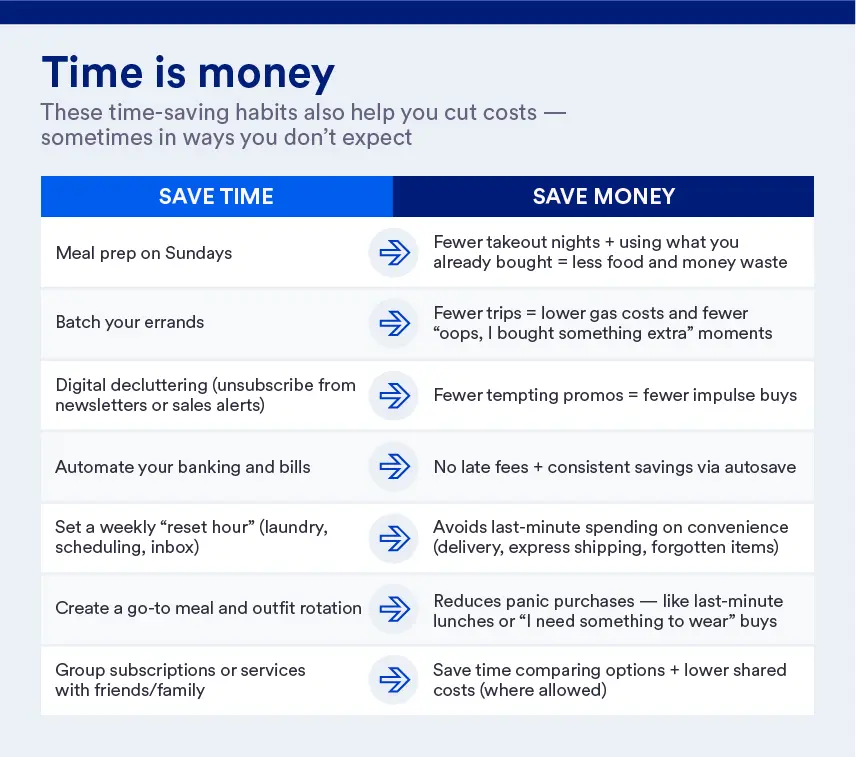
Saving time often leads to saving money — and vice versa. When your schedule feels less hectic, you make more intentional choices.
Take meal prep, for example. Prepping lunch on Sunday not only saves money in your weekly budget but also saves you time (and stress) during busy weekdays.
Likewise, doing two or three errands at the same time can help you save on gas. Automating payments frees up brain space and prevents missed bills. And batching similar tasks — like answering messages, cleaning specific zones of your home or scheduling appointments at once — reduces decision fatigue and keeps your week running more smoothly.
Clutter isn’t just an eyesore. It can also drain time, money and energy. A messy environment leads to:
Economizing your home can create real financial dividends.
Economizing works best when it’s purposeful. You don’t need a total life overhaul — just one thoughtful shift can create momentum.
Start small:
The real goal isn’t to spend less — it’s to spend (and live) better.
Budgeting tells your money where to go; economizing looks at your whole life — time, habits, home and spending — to reduce waste and make everything run more smoothly. Economizing supports budgeting.
Not at all. Some people economize to redirect money toward bigger goals (like travel or retirement); others economize to simplify busy lives or manage competing priorities. Economizing is a tool, not a financial emergency.
Yes. Economizing actually works especially well with unpredictable income. Small, low-cost habits — like automating tiny savings transfers, batching errands, repurposing what you have or freezing extra portions — help stabilize your finances even when paychecks vary.
Share the why, not just the rule. Explain how economizing will save time, reduce stress or help fund a specific shared goal. Start with one joint habit (like meal prep or running errands together) and expand slowly from there.
 Equal Housing Lender