
Key takeaways:
More than 1,400 CDFIs help bring capital and financial resources to underserved communities nationwide.
In 2025, U.S. Bank and the U.S. Bank Foundation committed $722.5 million to CDFIs and other intermediaries through loans, investments, grants and contributions.
With support from U.S. Bank and the U.S. Bank Foundation, CDFIs are helping expand affordable housing, increase small business lending and create long-term economic opportunity in communities across the country.

U.S. Bank and the U.S. Bank Foundation distributed $6.6 million to community development financial institutions through first half of 2026
For many small businesses, affordable housing developers and community organizations, access to capital can determine whether an idea moves forward or stalls. Community development financial institutions, known as CDFIs, can help fill that gap by providing financing and support in places where traditional funding may be harder to reach.
U.S. Bank and the U.S. Bank Foundation support CDFIs through grants, corporate contributions, lending and investment solutions that help expand access to capital, technical assistance and other resources that can help strengthen communities over time. As part of its ongoing philanthropic giving, the U.S. Bank community affairs team distributed more than $6.6 million in corporate contributions and U.S. Bank Foundation grants to CDFIs through the first half of this year.
What are CDFIs?
CDFIs are specialized, mission-based organizations that provide financial services in low- and moderate-income (LMI) communities and to people who lack access to financing. These services include lending, financial education and business coaching, with the goal of helping individuals and communities increase their economic potential and build wealth. According to the Opportunity Fund Network, there are more than 1,400 certified CDFIs nationwide.
How do CDFIs work with banks?
Banks offer CDFIs a variety of products and services, such as loans, patient capital and private equity investments, while foundations like the U.S. Bank Foundation provide grants to nonprofit CDFIs. U.S. Bank employees also lend their expertise to nonprofit CDFIs through board service.
U.S. Bancorp Impact Finance, the community development and infrastructure finance division of U.S. Bank, is a national leader in CDFI financing, providing loans, New Markets Tax Credit (NMTC) investments, capital markets expertise and other tailored products and services. These solutions help CDFIs expand their reach and increase the availability of capital in LMI communities. NMTC financing can help fund community assets such as health clinics, workforce training centers and affordable homeownership opportunities. The bank's longstanding relationship with IFF, a Chicago-headquartered CDFI, offers one example of how community investment can support jobs, services and opportunity.
Altogether, the financial support is significant: In 2025, U.S. Bank and the U.S. Bank Foundation committed $722.5 million to CDFIs and other intermediaries through loans, equity investments, foundation grants and corporate contributions.
How do CDFIs leverage corporate and grant funding to serve their communities?
U.S. Bank Foundation grants and U.S. Bank corporate contributions help fund CDFI operations, specific programs or projects, and training and direct technical assistance opportunities.
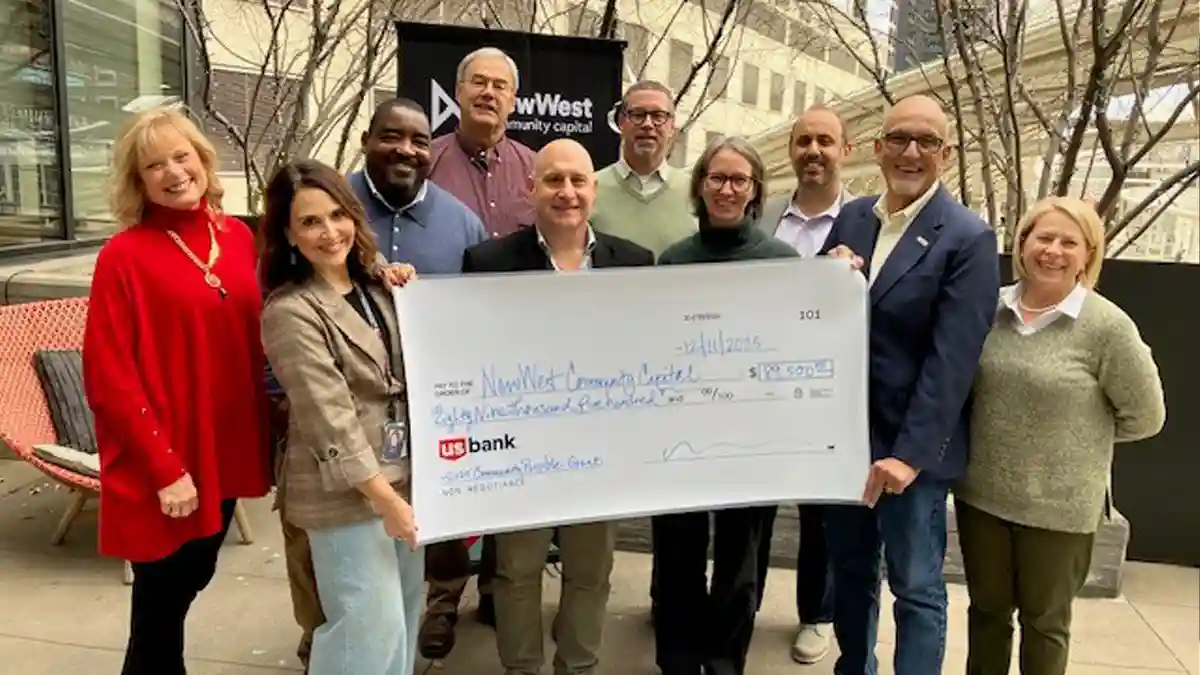
- NewWest Community Capital works to increase the number of affordable housing units in its eight-state footprint in the Intermountain West region. Grants from the U.S. Bank Foundation help NewWest provide financing and technical assistance to affordable housing developers to go toward pre-development efforts, land acquisition and construction. Arturo Pérez, a U.S. Bank community affairs manager, also serves on NewWest’s board.
- Allies for Community Business (A4CB), based in Chicago, helps entrepreneurs access the capital, coaching and connections needed to grow their businesses. With financial support from the U.S. Bank Foundation, A4CB can extend more small business loans and lines of credit and provide free business development services to local business owners, particularly those operating in LMI communities.
- U.S. Bank Foundation grants help Nonprofit Finance Fund (NFF) deepen its work with the California Community Land Trust Network. By providing community land trusts throughout the state with financial advisory and consulting services, NFF aims to help create long-term affordable homeownership solutions for LMI communities.
“CDFIs are close to the communities they serve, so they understand local needs and can help capital reach people and projects that might otherwise face barriers,” said Erica Opstad, head of community affairs at U.S. Bank and president of the U.S. Bank Foundation. “By supporting CDFIs, U.S. Bank and the U.S. Bank Foundation help strengthen trusted local organizations that are working to expand access to affordable housing, small business financing and other resources that contribute to long-term community growth.”
The U.S. Bank Foundation is a tax-exempt private foundation described in section 501(c)(3) of the Internal Revenue Code. The Foundation is funded primarily through contributions from U.S. Bancorp’s affiliates and subsidiaries. The Foundation’s mission is to close the gaps between people and possibility in the areas of work, home, and play.



 Equal Housing Lender