
Our culture
Reorienting the organization for performance
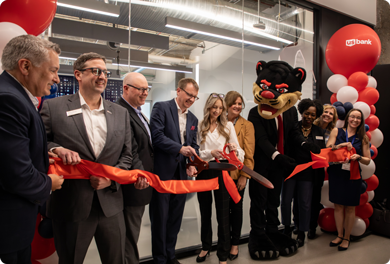

Life at U.S. Bank
Our people drive innovation, deliver exceptional experiences, and help clients reach their goals. Investing in their growth helps our business succeed.
In September, more than 10,600 team members participated in Development Week, a company-wide skill-building initiative that included sessions focused on topics like communications, strategy and helping team members grow.
We also launched foundational AI courses in our online Skills Academy, empowering team members to explore AI solutions and use them responsibly. This supports our commitment to continuous learning and high performance.

Community driven
Delivering through Impact Finance
U.S. Bancorp Impact Finance had another record year, delivering capabilities central to our fee income portfolio and supporting clients and communities.
Through tax credit investments, syndications, and lending solutions, the organization supports affordable housing, economic growth, historic building restoration, renewable energy, and community development financial institutions. The highlights we were most proud of last year included a 95-unit affordable housing build in Vancouver, Washington, a factory rehab in St. Louis, and two solar projects in California powering about 94,000 homes annually.

Continued growth in small business lending
We invested in our communities and saw record growth in U.S. Small Business Administration (SBA) lending in fiscal year 2025. For the SBA fiscal year ending on Sept. 30, 2025, we made 3,453 SBA 7(a) loans, ranking fourth in number of loans. We increased our total volume of SBA 7(a) loans by 23% from fiscal year 2024, totaling $871.2 million and ranking sixth among all lenders.
U.S. Bank Foundation Opportunity Fund grants
We support the communities we serve in various ways, including through the U.S. Bank Foundation1, which awarded $15 million in grants from the Opportunity Fund in 2025. This five-year, $75 million charitable fund aims to boost wealth-building for low- to moderate-income communities by aiding nonprofits focused on small businesses, homeownership, affordable housing, digital access and workforce development.
In 2025, several grants funded nonprofit programs for disaster relief in Los Angeles and St. Louis, helping communities affected by wildfires and tornadoes. Supported organizations included Habitat for Humanity, Neighborhood Housing Services Los Angeles County, The Center by Lendistry, and Invest STL.

By the numbers
$111.7M
in corporate contributions and foundation grants
257K
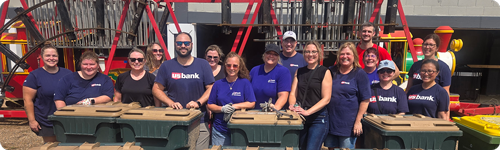
employee volunteer hours
2M
individuals served with financial education, with focus on low- to moderate-income communities
$3.9B
in affordable housing tax equity and loans
$722.5M
committed to community development financial institutions (CDFIs) and other intermediaries2