
Key takeaways:
Specialized sectors are driving the strongest commercial real estate opportunities as investors prioritize expertise over broad exposure.
Office market recovery is underway but uneven, with high-quality buildings in desirable locations outperforming as organizations embrace intentional hybrid work strategies.
Well-capitalized, patient investors are positioned to benefit as the bid-ask spread narrows, refinancing activity rises and disciplined fundamentals continue to separate successful operators from the rest.
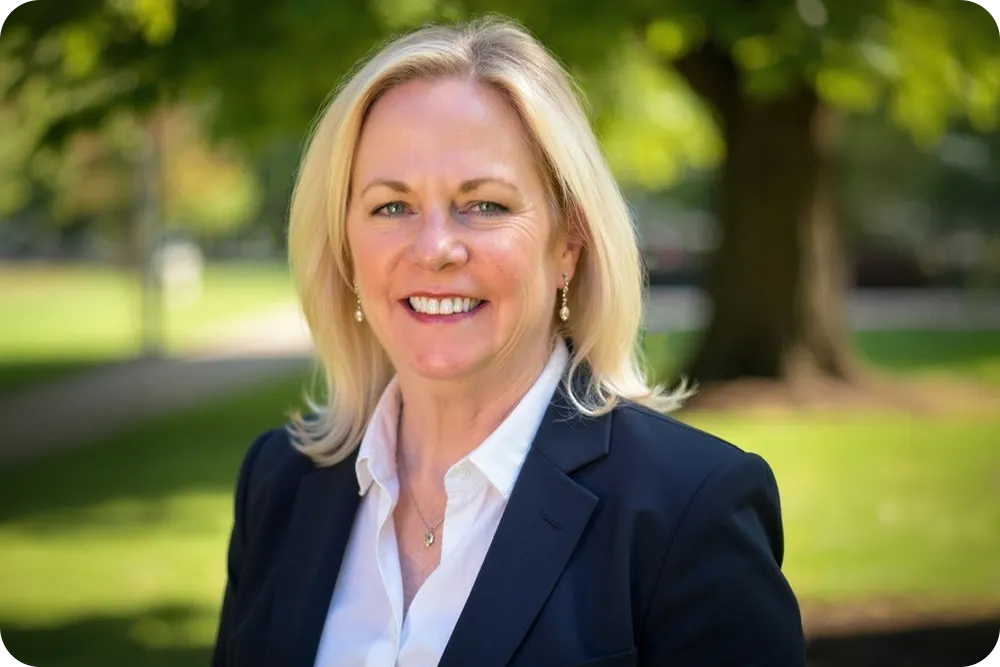
Ralph Pace, who leads commercial real estate in the central region for U.S. Bank, talks about where he sees opportunities as clients navigate a more specialized market
Ralph Pace developed an affinity for commercial real estate early in his banking career because of how dynamic and diverse it is, touching every sector of the economy – from housing to healthcare to industrial facilities and office buildings.
“Commercial real estate combines finance with something tangible,” he said. “You can watch projects take shape and see the direct impact they have on communities.”
Today, Pace leads commercial real estate in the central region for U.S. Bank. He recently sat down to share his perspective on where he sees momentum building, what clients are focused on today and why a disciplined approach continues to matter across market cycles.

After several years of disruption following the pandemic, where are you seeing the greatest opportunities in commercial real estate today?
I would describe today’s market as a story of specialization.
There continues to be opportunities in sectors with strong long-term demand, such as housing, so we're starting to see healthier fundamentals emerge in many markets. In addition, multifamily housing remains attractive as new supply begins to moderate and existing inventory is absorbed.
Data centers continue to be a major area of focus as artificial intelligence, cloud computing and digital infrastructure needs expand. It's difficult to have a conversation about commercial real estate today without discussing data centers.
Healthcare-related properties are another area to watch. Demographic trends and an aging population continue to create demand for healthcare services and facilities, including senior housing.
We're also seeing opportunities in select industrial properties and segments of the lodging market. The common theme is that investors are increasingly seeking expertise and specialization rather than taking a broad approach across all property types.
Office space remains one of the most closely watched sectors. What are you seeing there?
We're seeing improvement in the office market, but it's not occurring evenly.
Many organizations have settled into hybrid work models and are becoming more intentional about how they use their office environments. They're looking for spaces that support meaningful in-person interactions and employee engagement, so the strongest performance continues to be concentrated in high-quality buildings with modern amenities, desirable locations and spaces designed to support collaboration.
What are commercial real estate clients focused on today, and how have those priorities changed over the last few years?
Agnostic of the sector of real estate, much of the conversation centered on uncertainty for the past several years. Clients were focused on inflation, interest rates, property values and maintaining liquidity.
Those issues still matter, but today the conversations have become more strategic. Many clients have adjusted to operating in an uncertain environment and are increasingly focused on growth opportunities rather than simply managing risk.
For example, we're seeing clients ask questions like: Where should we invest? How should we position our portfolios? How do we move from defense to offense?
I wouldn’t say clients have become comfortable with uncertainty, but they’ve developed a skill set for dealing with it. They're maintaining a strong focus on operational performance. Tenant retention, occupancy, expense management and asset quality remain critical priorities. Clients are looking for ways to be stronger owner-operators while positioning themselves for future growth.
You've often described the role of the commercial real estate team at U.S. Bank as being bankers, not just lenders. What does that mean?
That’s a phrase I’ve really embraced; it reflects how we approach relationships and what our clients expect of us.
Our goal is to be advisors, not just providers of capital.
Clients expect more than financing. They value perspective, industry insights and strategic guidance. That requires us to understand their business, their portfolio, the markets they operate in and the goals they're trying to achieve.
At U.S. Bank, we have extensive capabilities that allow us to support clients in a variety of ways. Being a banker means bringing those resources and ideas to the table and helping clients think through opportunities and challenges from a broader lens.
Ultimately, it's about being client-centric and focusing on the entirety of the relationship rather than a single transaction.
What opportunities do you see emerging over the next 12 to 18 months?
The opportunities will be strongest for investors and developers who are well-capitalized and patient.
That patience is especially important when you look at where buyers and sellers align on value. I’ll use the real estate term “bid-ask spread,” meaning the difference between the price sellers want to sell for and the price buyers want to buy at. There’s been a big divide for the past few years, but that gap is closing and we’re going to see it continue to narrow, which will lead to a heightened level of acquisition opportunities.
We're also likely to see continued refinancing and recapitalization activity as significant commercial real estate debt matures. That creates openings for investors, owners and financial institutions to help reposition assets and support future growth.
More broadly, improving liquidity and greater market stability could create capacity for acquiring high-quality assets that may have been difficult to access in recent years.
You've experienced several market cycles throughout your career. What lessons remain most relevant today?
The most important lesson is that the fundamentals haven’t changed.
Successful real estate investing continues to be driven by strong cash flow, access to capital and disciplined execution. Regardless of market conditions, those three principles remain essential.
That's why we continue to focus on strong sponsors, conservative leverage and high-quality assets. Market cycles can create challenges, but they also reveal which organizations are positioned to successfully navigate those challenges.
The groups that maintain liquidity, stay disciplined and focus on fundamentals are typically the ones that emerge the strongest when conditions improve.


 Equal Housing Lender