
Key takeaways:
New 529 plan rules make college savings plans more valuable and flexible for families. 529 plans now support a wider range of educational and career expenses than before.
529 plans can help pay for private K-12 education, tutoring, SAT/ACT fees, trade schools, vocational programs and professional credentials. Expanded qualified expenses give families more ways to use education savings.
Unused 529 plan funds can be rolled into a Roth IRA under certain conditions. This enhancement provides added flexibility and long-term financial planning opportunities for beneficiaries.
A U.S. Bank Private Wealth market leader shares how new rules have expanded 529 savings plans
Recent changes to 529 savings plans have made them better than ever, according to Catherine Irby Arnold, Washington State Market Leader at U.S. Bank Private Wealth Management, who has spent more than 30 years helping families navigate financial planning.
Why are 529s so popular?
Given their tax-free growth, federal tax-free withdrawals for qualified expenses and potential state tax breaks, 529 accounts have been a cornerstone for education savings for families since their introduction in 1996. At the end of December 2024, 529 savings plans held more than $500 billion, according to the Investment Company Institute.
“I opened a 529 as soon as my son was born,” Irby Arnold said. “My grandmother gave me $1,000, and it went right in there.”
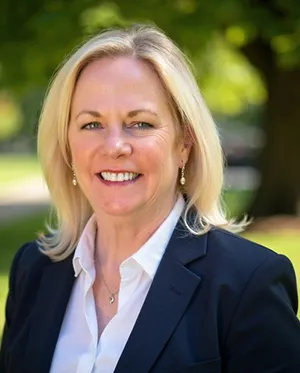
New rules for 529 college savings plans have been enacted in recent years, making these accounts more flexible, Irby Arnold said. “They were originally a tax-advantaged way to save for college, but now 529s stretch much further.”
What are the key enhancements to 529s?
529s have evolved over the decades. “The message needs to get out there that 529s can be used for things beyond college and beyond education,” Irby Arnold said.
Here, she discusses five recent enhancements to the program:
- Broadened definition of qualified K-12 expenses. Previously limited strictly to tuition, tax-free K-12 withdrawals have been significantly broadened and can now cover things like textbooks, tutoring, standardized tests (e.g., SAT, AP exams, etc.) and more.
- Doubled K-12 withdrawal limits. Beginning in 2026 as a result of the One Big Beautiful Bill Act (OBBBA), the maximum per-child distribution for qualified K-12 expenses will double from $10,000 to $20,000. “This offers greater support for families seeking to offset the rising costs of private schools,” Irby Arnold said. Qualified expenses may include costs connected with enrollment or attendance at public, private or religious elementary and secondary schools.
- Support for career training and credentialing. Funds can now be used for trade schools, vocational programs and non-degree credentials. “This is great news for people pursuing licensing exams and prep courses, like CPA, the bar exam or Certified Financial Planner, as well as specialized trade certifications like plumbing and welding,” Irby Arnold said. “They’re now much more flexible, and you can use them for many types of educational pathways.”
- Rollovers to Roth IRAs. With the passage of the SECURE 2.0 Act, 529 plan account owners can roll over some unused 529 funds to a Roth IRA owned by the 529 beneficiary without incurring federal taxes or penalties, subject to certain limits. “This is useful in situations where a child decides to not pursue college, gets meaningful financial aid or some other reason that causes funds to be left over,” Irby Arnold said.
- ABLE Account rollovers made permanent. Tax-free rollovers from 529 plans to ABLE accounts (a tax-advantaged savings and investment account for people with disabilities) previously set to expire at the end 2025 were made permanent. “This strengthens education planning and long-term financial security for families of people with disabilities,” Irby Arnold said.
How do 529s help meet college costs?
Irby Arnold shared a personal story to illustrate the power of 529s. “My kid did well in high school, got a four-year scholarship, and it paid for part of his costs. He’s in a mechanical engineering program that takes five years. So, this 529 is supplementing the loss of that scholarship after four years.”
What can parents do now to address education costs?
Irby Arnold advised clients to consider 529s as a tax-advantaged way to meet their children’s college, education and career-track expenses. She suggested that individuals check with their personal tax and financial professionals to evaluate if a 529 account is right for them.
“I love the wealth management business because you can really make a huge impact on people’s lives,” she said. “And that’s particularly true when helping families with the costs of education.”


 Equal Housing Lender