What are some of the disadvantages of assuming a mortgage?
One downside to assuming someone’s mortgage is that the loan you’re taking on may not be large enough to cover the home’s current market value. That could leave you responsible for paying the difference.
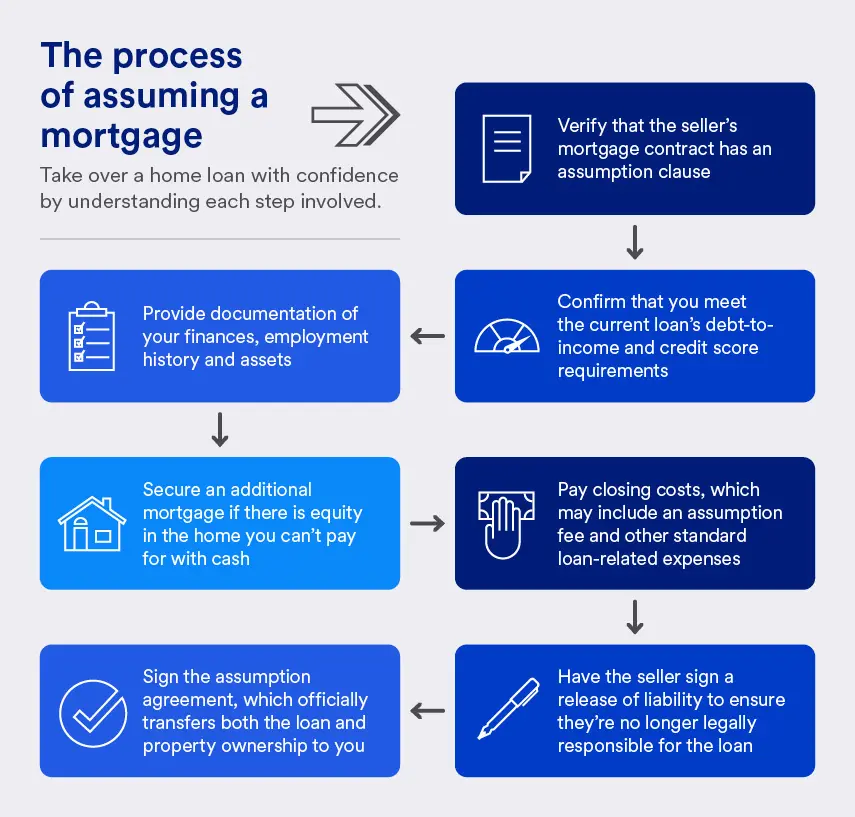
Say, for example, that the current owner purchased their house a decade ago for $300,000. They paid $10,000 down and took out an FHA loan for $290,000. They have since paid the loan down to $230,000. But now, due to the run-up in real estate prices, the home is worth $500,000 ($270,000 more than the mortgage balance). As the buyer, you will only assume the $230,000 remaining on the mortgage. So, you will still be on the hook for the $270,000 difference and would need to put down cash or take out a second mortgage to cover it.
If you have two mortgages, you’ll need both lenders to cooperate on granting the terms of service. This isn’t always possible and can result in defaulting. You may also need to obtain loan insurance – which, with FHA loans, can be significant.
Assumable mortgages can have drawbacks for sellers, too. The seller may remain legally responsible for the mortgage even after the sale, unless the lender specifically releases them from the obligation.
And, in the case of VA loans, the seller might have to give up their right to an “entitlement,” which is the guarantee that the Department of Veterans Affairs makes good to the lender if you default on your mortgage. In many cases, this entitlement allows veterans to purchase homes with zero percent down.
(If you assume a VA loan, the interest rate typically remains unchanged, but you may need to pay a funding fee to the VA loan program.)
If you, as the seller, sell your home to another veteran, you can ask them to formally substitute their entitlement for yours on the mortgage. But if you sell to a civilian, you may lose access to all or part of your entitlement on future home purchases.




 Equal Housing Lender