
Key takeaways:
Commercial real estate conditions across the West continue to vary by segment, with momentum building in some areas while others face continued pressure.
In today’s higher-rate, more volatile environment, projects moving forward are led by sponsors with strong balance sheets, operational depth and access to full banking relationships rather than reliance on cheap debt.
A healthier market over the next 12 to 18 months will depend less on rate cuts and more on rate stability, improved transaction volumes and the digestion of excess multifamily supply in key markets.
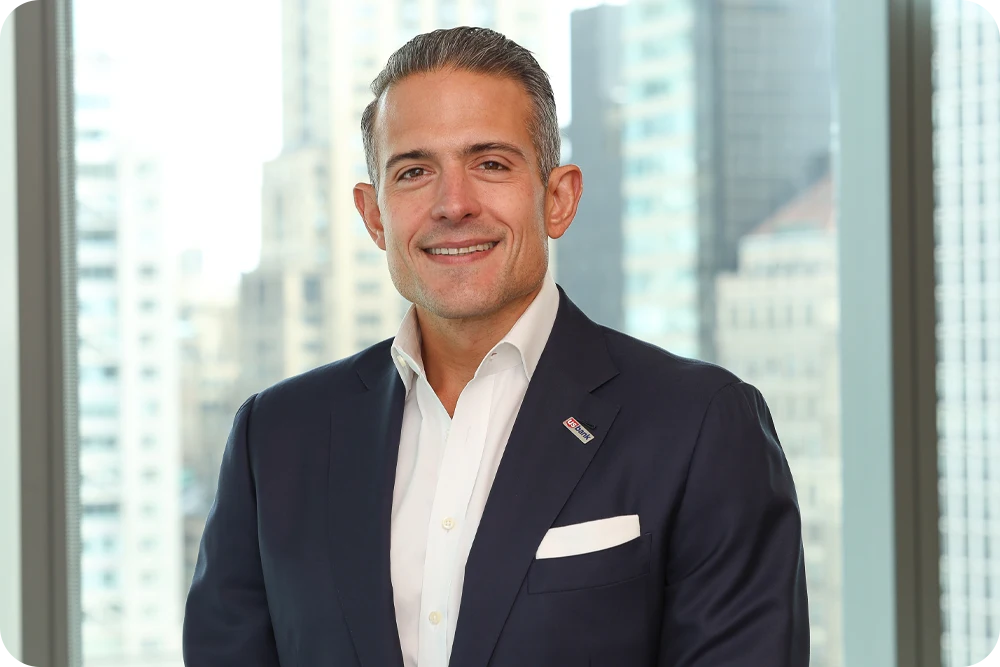
As the commercial real estate leader for the West Region, Adrian Montero has his finger on the pulse of California, Nevada and Arizona’s office, industrial and multifamily markets.
In this Q&A, Montero shares what he and his team are seeing across the region – where momentum is building, where challenges remain, and how sponsors and lenders are navigating today’s higher-rate environment.
Q: You’ve worked in real estate for most of your career. What drew you to the industry and what is your role today?
A: In real estate, no two deals are the same and that’s what I love. Every transaction has its own mix of asset types, market dynamics, sponsor strategy and capital structure. I also like that the business rewards curiosity, attention to detail and long-term relationship building.
I’ve been with the bank for about 25 years, starting as a credit analyst. Today, I oversee the commercial real estate business for the West Region, with teams in San Francisco, Los Angeles, Orange County, San Diego, Phoenix and Las Vegas. We work with large and institutional real estate sponsors, and we aim to be their primary bank and long-term partner – not just a lender on a single deal.
Q: Across California, Nevada and Arizona, where are you seeing the biggest differences in fundamentals?
A: It’s a fragmented landscape. The markets are large, diverse and moving at different speeds.
For example, San Francisco received a lot of negative attention post-COVID, but we’re starting to see AI-driven tenant demand pull companies back into downtown office space. That leasing activity is beginning to influence values in ways we didn’t see 18 months ago.
San Diego has a bifurcated story. Life sciences development became overbuilt during the pandemic, and that segment is still working through excess supply. But we remain active there – multifamily transactions and diversified portfolios from some of the market’s most well-regarded private developers keep our pipeline healthy.
In Phoenix and Las Vegas, a large multifamily supply wave has put near-term rent growth under pressure, making refinancing more challenging.
In Los Angeles and Orange County, well-located apartments and strong industrial assets can perform well, while office space continues to face headwinds.
Q: Six years after the onset of COVID, what are employers and tenants thinking about office space?
A: The office story is more nuanced than the headlines suggest. Overall numbers can still look challenging, but there’s a clear split. High-quality, Class A office space in the right locations is still leasing, as tenants use quality and amenities to bring people back. The pain is more concentrated in Class B and Class C, and I don’t see that resolving quickly.
From a lending perspective, we’re active but very selective. The business plan has to hold up under stress. Sponsors moving forward aren’t counting on a broad recovery; they’re making very specific calls on specific assets.
Q: From a lender’s perspective, what separates the projects and sponsors that are moving forward with confidence right now?
A: Balance sheet strength is a big differentiator. Sponsors who entered this cycle with lower leverage and strong liquidity are in a very different position than those with near-term refinancing needs. Operational depth matters more today, too. When rates were very low, cheap debt helped carry a lot of deals. In this environment, execution is critical.
Many transactions now require more than a loan. Sponsors benefit from a full banking relationship – syndication capacity for larger deals, derivatives to help manage interest-rate exposure, and strong treasury and payment systems to manage deposits – and that’s an area where U.S. Bank can differentiate.
Q: How would you describe sponsor appetite today compared with a few years ago?
A: A few years ago, sponsor appetite was largely about deal flow and low-cost debt. Today, sponsors are more selective and focused on capital efficiency. They’re asking tougher questions up front about long-term performance, rate sensitivity and structural flexibility.
There’s also a flight to quality on the banking side. Sponsors want banks that can execute, particularly on larger, syndicated transactions – which can work in favor of a bank with a large balance sheet. More recently, geopolitical uncertainty has added a new layer of caution, leading some buyers and sellers to pause or reassess timing, and in some cases creating demand for shorter-term or bridge financing.
Q: Looking ahead 12 to 18 months, what would need to happen to get back to a healthier market?
A: First, we need more rate stability. It’s not necessarily cuts, but a more predictable environment. Volatility has been more damaging than the rates themselves.
Second, transaction volumes need to continue improving so price discovery can keep moving forward. When buyers and sellers find alignment, activity tends to follow.
Third, the multifamily supply wave needs to fully digest in the most oversupplied markets.
As new deliveries slow and occupancy stabilizes, refinancing pressure should ease and the market can open up further.
Q: In your travels across the West, what’s one thing you notice immediately that data doesn’t always capture?
A: I pay close attention to sponsor confidence. You can analyze vacancy rates, cap rates and other metrics, but what doesn’t always show up in a spreadsheet is whether sponsors truly believe in a market and are actively deploying capital, or whether they’re simply managing through uncertainty.
In my experience, that “confidence signal” often appears before the data catches up. We’ve started to see that shift across key markets, which is reflected in stronger pipeline activity and closing volume.
Q: Where do you think AI can realistically improve commercial real estate work, and where is it more hype than help?
A: AI’s most immediate value is helping teams process large amounts of information faster – things like market comparables, lease abstraction, rent analysis and portfolio-level analytics. Anything that helps surface the right signals more efficiently can improve underwriting and decision-making.
While we can move faster with AI, we should never be relying on it for judgment calls. Commercial real estate underwriting still depends on local market knowledge, sponsor assessment and scenario-based human thinking, especially in situations where historical data doesn’t provide a clear roadmap.
For more information about the U.S. Bank commercial real estate team, visit this page.

 Equal Housing Lender