
Key takeaways:
Investors considering launching a fund can use the multiple series trust model to potentially reduce costs, streamline operations and bring products to market more quickly.
Growing interest in multiple series trusts reflects increasing demand for efficient investment fund structures that help managers focus on strategy and growth while maintaining control of their products.
Customers can access scalable, secure payment tools designed to reduce complexity and support new revenue opportunities.
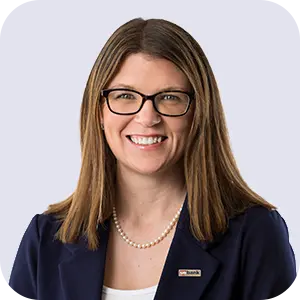
Elizabeth Scalf, senior vice president on the U.S. Bank Global Fund Services team, discusses the growing interest in this unique vehicle
Multiple series trusts (MSTs) are open-end investment management companies organized as shared trusts that allow multiple funds to operate under a single legal and governance structure. Because of this distinctive structure, MSTs offer an efficient means of operating a registered investment fund in an increasingly complex compliance and governance landscape – which is part of the reason why this decades-old vehicle is seeing a new surge of interest.
We sat down with Elizabeth Scalf, senior vice president and chief compliance officer on the Global Fund Services team at U.S. Bank, to talk about how MSTs have transformed from a niche product to one that has caught the attention of a wide range of investment managers intrigued by MSTs’ ability to offer compelling speed to market and cost efficiency.
U.S. Bank operates the most MSTs in the industry. How does that scale benefit clients?
We currently operate 10 MSTs, and across every measurement – number of clients, number of funds and assets under management – we’re the biggest in the industry. That scale reflects both longevity and intentional investment in the business.
One of our biggest advantages is the breadth and bandwidth of our talent. Each MST requires four dedicated officers – a president, treasurer, secretary and chief compliance officer – all of whom are U.S. Bank employees within our Global Fund Services team.
Those are very technical roles. With 10 trusts, that means roughly 40 highly specialized officers. Many have more than a decade of experience. That’s a deep bench of technical expertise and industry knowledge.
This strength in numbers creates significant benefits to our clients. Across our MST teams, we see such a variety of advisers, funds, strategies and situations, which allow us to share that knowledge with clients.
What is an MST?
Rather than each fund forming its own standalone trust — with its own board, officers and infrastructure — a multiple series trust houses many funds within one shared trust. Each fund, or “series,” maintains its own investment strategy, portfolio and branding, while benefiting from centralized governance and oversight.
Finally, scale enables cost efficiencies. MSTs allow certain expenses to be shared at the trust level. For example, if 10 standalone funds each purchased insurance separately, the total cost would be higher than purchasing it collectively through the MST. These meaningful savings are passed along to funds and ultimately, their shareholders.
Why would a client choose U.S. Bank?
There is healthy competition in the market for our services. While scale matters, it’s not our defining characteristic. Our true differentiators are our client focus, our dedication to the business and the quality of our full-service model.
We are one of the only providers in the industry that offers a complete service platform under one roof: fund administration, fund accounting, transfer agency and custody within an MST model. Many competitors require clients to coordinate between multiple service providers; we streamline that complexity.
Being supported by a large, stable bank is also a major advantage. As one of the largest banks in the United States, U.S. Bank provides infrastructure that is hard to replicate – especially in areas like cybersecurity and fraud prevention.
Clients come to us knowing they’re getting a strong partner, experienced officers and a stable long-term relationship. When you’re entrusting critical activities to a service provider, quality and dedication to the offering matters. Essentially, the success of your firm and your shareholders depend on that partnership. U.S. Bank has been doing this successfully for a long time.
What kinds of problems are MSTs solving for investment managers right now?
There are two major ones: speed to market and cost efficiency.
There’s significant growth in ETFs, particularly entrepreneurial and startup managers launching products for the first time. The MST model allows new advisors to go from concept to launch faster because the governance structure is already established.
It’s also a turnkey solution. Advisors can join an existing MST and gain access to critical infrastructure immediately, without needing to hire a large internal team. For smaller firms, that’s invaluable as operational responsibilities shift to service providers, freeing internal resources.
At the same time, the industry is extremely cost-sensitive. Profit margins for asset managers continue to tighten. Running a fund within an MST is generally more cost-effective than operating a standalone structure because expenses can be shared and administrative burdens are reduced.
What are common first-time launch surprises and how does your team help managers avoid them?
Many first-time managers underestimate how regulated the industry is. Launching a registered product requires SEC reviews, board approvals, compliance considerations, operational coordination, budgeting analysis and profitability modeling. There are also strategic decisions that can have operational consequences.
We help advisors think through these blind spots early. Because we’ve seen so many launches, we can identify where knowledge and experience gaps exist to provide guidance before missteps occur.
MSTs have existed since the 1980s. Why are they gaining popularity now?
While MSTs have been around for decades, their growth trajectory and popularity have accelerated in the past few years.
For the past three years, our assets under management in our MST model have experienced new highs, and we are having more conversations about the MST model with prospective and existing clients than ever before.
We are seeing more advocacy in our industry for MSTs than I’ve ever seen, and the model is being discussed more openly in industry publications. Managers of standalone trusts, who may have previously dismissed the MST model, are now exploring it more seriously.
The “secret” is out and interest continues to grow.
Where do you see the MST model heading next?
I see the model continuing to gain momentum. Product growth across the industry shows no signs of slowing, and the marketplace continues to see new entrants as competition intensifies. Cost remains one of the primary factors investors use to evaluate products — and that pressure isn’t going away.
At the same time, firms are focused on reducing their operational burden. MSTs remain inherently more efficient, which continues to resonate with managers. Combined with greater advocacy from service providers and increased coverage in industry publications, awareness of the MST model and its benefits is growing.
What misconceptions about MSTs would you like to correct?
The biggest misconception is that joining an MST means losing control of your product. That’s simply not true.
The board of an MST serves as a governance body and a strategic advocate. Advisors retain control over their brand and strategy. The board supports them – it doesn’t replace them.
Another misconception is that MST boards aren’t nimble. Our MST boards have demonstrated flexibility and responsiveness to client needs to keep pace with the change of product innovation.
Disclosures
All U.S. Bank Global Fund Services entities are wholly owned subsidiaries of U.S. Bank, N.A. Custody services are offered by U.S. Bank, N.A.
U.S. Bank does not guarantee products, services or performance of its affiliates and third-party providers.



 Equal Housing Lender