
Capitalize on today's evolving market dynamics.
With changes to taxes and interest rates, it's a good time to meet with a wealth advisor.

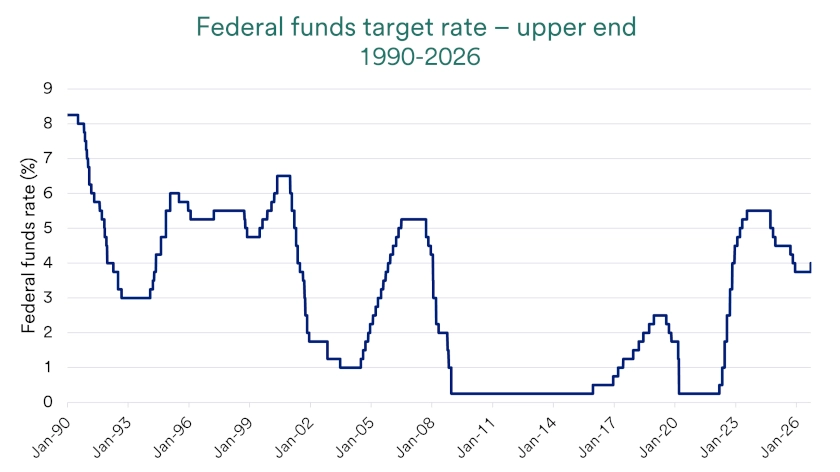
The Federal Reserve (Fed) lifted their policy rate to 3.75%–4.00% amid a renewed focus on lowering inflation.
Rising oil prices drove inflation and Treasury yields higher so far this year.
Markets expect additional Federal Reserve rate hikes through mid-2027.
The Federal Reserve (Fed) influences borrowing costs, savings returns and financial conditions across the economy. Congress directs the Fed to pursue maximum employment and stable prices, goals commonly known as its dual mandate. The Fed’s September decision renewed its emphasis on controlling inflation while employment and consumer spending remained resilient.
At its September 16 meeting, the Federal Open Market Committee raised the federal funds target range by 0.25 percentage point to 3.75%–4.00%. The federal funds rate is the short-term rate banks charge one another for overnight loans of reserves, and changes can influence mortgages, credit cards, business loans, savings yields and bond markets. Investors largely expected the increase, which marked the first Federal Reserve rate hike in more than three years.
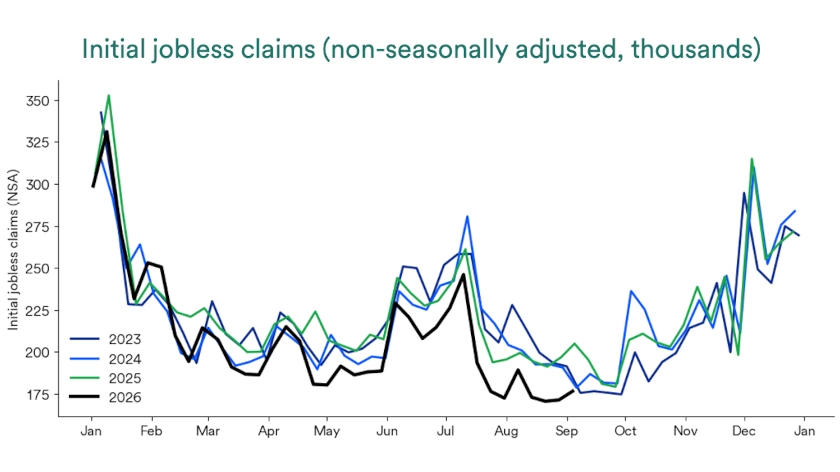
Current labor data indicate that the economy remains near maximum employment. The Bureau of Labor Statistics’ August employment report showed the unemployment rate standing at 4.1%, employers adding an average of 80,000 jobs each month this year and weekly initial jobless claims remaining near all-time lows. 1 These positive labor market conditions are allowing policymakers to focus more directly on inflation.
The committee approved the rate increase unanimously after three members dissented at the prior meeting. The vote indicates that Chair Kevin Warsh built broader support for a firmer response to inflation. Before the announcement, market prices indicated about a 90% probability of an increase, and investors now anticipate three additional hikes by mid-2027, including one more in 2026.
The federal funds rate is the short-term rate banks charge one another for overnight loans of reserves, and changes can influence mortgages, credit cards, business loans, savings yields and bond markets.
Warsh has consistently described the Fed’s 2% inflation target as essential to its credibility. He has also questioned forward guidance, or public signals about future policy, because economic conditions can change before policymakers act. At his September press conference, Warsh reinforced that focus in his opening remarks, warning that “too many categories are still posting increases above 3%.”
Warsh declined to submit projections for the Fed’s Summary of Economic Projections because he views those forecasts as a form of forward guidance. Excluding Warsh, the median policymaker forecast shows one additional rate increase in 2026, slightly stronger economic growth in 2027 and little change in next year’s inflation outlook. Policymakers also raised their 2028 inflation projection slightly, signaling that they expect price pressures to take time to settle.
The Fed made few changes to its official policy statement, but it added that “domestic spending remained resilient.” Continued household and business demand can support growth, yet strong spending may also keep inflation elevated. That combination gives policymakers room to raise rates without responding to an immediate downturn.
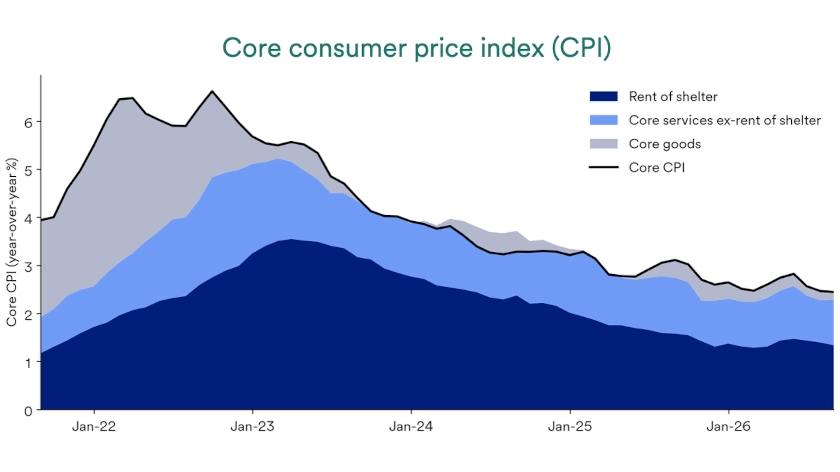
Rate increases from 2022 through 2023 helped slow inflation, but higher oil costs have renewed near-term price pressure. Core Consumer Price Inflation rose 2.4% year-over-year in August, while Core Personal Consumption Expenditures (PCE) rose from 3.0% in December 2025 to 3.3% in July 2026. Headline PCE, which includes more volatile food and energy prices, rose 3.7% year-over-year in July, well above the Fed’s 2% target and strengthens the case for tighter policy. 2
West Texas Intermediate crude oil futures started the year near $57 per barrel, peaked at $113 in April and recently moved back above $100. Higher energy costs can raise transportation, manufacturing and household expenses, which may spread inflation across the economy. Oil’s renewed rise has increased expectations for additional rate hikes and lifted both short- and long-term Treasury yields. 3
Central banks outside the United States face similar inflation pressure from higher energy prices. The European Central Bank and Bank of Japan have already raised rates in 2026, and investors expect the Bank of England and Bank of Canada to follow. This broad shift reverses the 2025 easing cycle and could keep global borrowing costs elevated.
Interest-rate decisions represent only one part of Fed policy. The Fed also influences financial conditions through its balance sheet, which includes Treasury securities and other bond holdings. Those holdings stand near $6.6 trillion after peaking near $9 trillion in 2022, and the Fed stopped shrinking the balance sheet in December 2025.
The Fed began buying short-term Treasury bills in December 2025 to maintain ample bank reserves and keep overnight rates near its target. These purchases absorb part of the Treasury supply available to investors and can improve market liquidity, meaning the amount of money readily available to buy goods, services and financial assets. The Fed has reduced its regular purchases in 2026, and its holdings have changed little since Warsh became chair.
Ample liquidity can help financial markets absorb unexpected shocks and function smoothly. Balance-sheet policy cannot remove the economic risks created by inflation, higher energy costs or geopolitical conflict, and Warsh has questioned whether large-scale purchases remain appropriate over the long term. He has formed a task force to review the Fed’s approach to data, communication and balance-sheet policy.
Investors should evaluate Federal Reserve asset purchases alongside interest rates, inflation and economic growth rather than rely on a single policy signal. A larger balance sheet can improve liquidity even as higher policy rates restrain borrowing and demand. These tools can work in different directions because the Fed uses each one to address a distinct part of market functioning or the economy.
We maintain a constructive outlook for diversified portfolios and see opportunities in U.S. stocks, global infrastructure and structured credit, or investments backed by pools of loans and other debt. Higher energy costs could lift inflation and slow economic activity, but consumer spending and corporate earnings remain resilient. Lower corporate and individual taxes and recent tariff rebates also provide fiscal support to the economy.
Diversification can broaden potential sources of return when inflation, interest rates and geopolitical risks shift at the same time. A mix of stocks, bonds, infrastructure and income-oriented assets may respond differently across economic conditions, although diversification does not guarantee returns or protect against losses. Investors can review whether their portfolios still align with their goals, time horizon and tolerance for risk with a financial professional.
Fed policy will continue to respond to new evidence on inflation, employment, consumer demand and energy prices. Current conditions support a restrictive stance, but incoming economic data will shape the path ahead. A long-term plan can separate temporary market noise from developments that truly change the long-term outlook.
A nation’s central bank, which in the United States is the Federal Reserve, typically controls monetary policy. The Fed’s management of monetary policy can have a significant impact on the shape of the nation’s economy. Congress’ mandate for the Fed is to maintain price stability (manage inflation); promote maximum sustainable employment (low unemployment); and provide for moderate, long-term interest rates. Fed monetary policy influences the cost of many forms of consumer debt such as mortgages, credit cards and automobile loans.
The Fed is the nation’s central bank, and perhaps the most influential financial institution in the world. The central governing board of the Federal Reserve reports to Congress, while the President appoints the chair of the Federal Reserve. There are also 12 regional Federal Reserve banks that are set up like private corporations.
The Federal Reserve’s Federal Open Market Committee sets a target interest rate policy for the federal funds rate. This is the rate at which commercial banks borrow and lend excess reserves to other banks on an overnight basis. The Fed raises or lowers the rate to impact underlying economic conditions. For example, in 2022, as inflation surged, the FOMC began raising interest rates to make borrowing more expensive and slow economic activity. The Fed designed that strategy to ease pricing pressures and reduce the inflation rate. In periods when the economy is slow or in a recession, the Fed tends to lower rates to try to stimulate economic activity and help the economy expand again.
The Federal Open Market Committee unanimously raised the federal funds target range by 0.25 percentage point to 3.75%–4.00%. The increase marked the first Fed rate hike in more than three years. Policymakers emphasized their commitment to returning inflation to the 2% target while consumer spending and employment remained resilient.
Persistent inflation and higher oil prices strengthened the case for tighter monetary policy. Core Personal Consumption Expenditures inflation, which excludes volatile food and energy prices, rose from 3.0% in December 2025 to 3.3% in July 2026. Higher energy costs can also spread through transportation, production and household expenses, adding to broader price pressure.
Market prices and the median Fed policymaker projection point to another rate increase in 2026, with investors anticipating three additional hikes by mid-2027. The path remains conditional rather than fixed because inflation, employment, consumer demand and oil prices can change. The Fed may adjust the pace or direction of policy as new economic data arrive.
After hiking interest rates for the first time in three years at the Federal Reserve’s September policy meeting, Fed Chair Kevin Warsh reiterated his commitment to return inflation to the Fed’s 2% target.
We can partner with you to design an investment strategy that aligns with your goals and is able to weather all types of market cycles.

 Equal Housing Lender. Deposit products are offered by U.S. Bank National Association. Member FDIC. Mortgage, Home Equity and Credit products are offered by U.S. Bank National Association. Loan approval is subject to credit approval and program guidelines. Not all loan programs are available in all states for all loan amounts. Interest rates and program terms are subject to change without notice.