
Capitalize on today’s evolving market dynamics.
With changes to taxes and interest rates, it's a good time to meet with a wealth advisor.
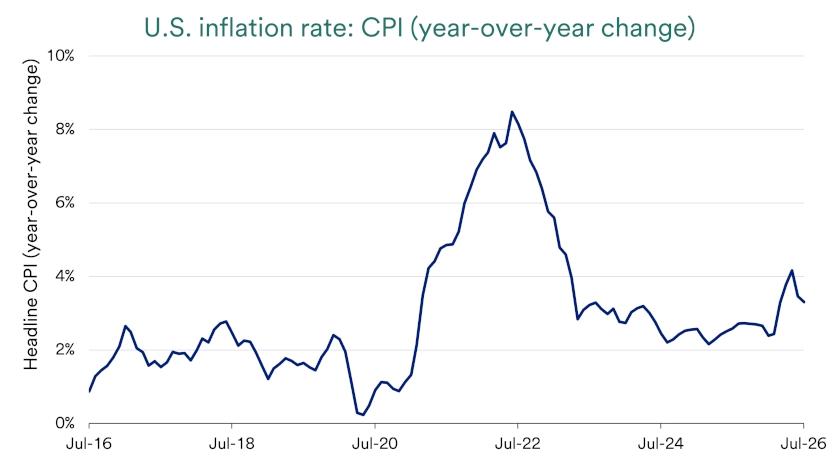
Inflation affects the economy through household purchasing power, business costs and interest rates. July CPI rose 3.4% from a year earlier as energy prices stayed elevated.
Energy, shelter and tariffs could keep inflation rising unevenly, although slower rent and home-price growth may reduce housing inflation over time.
The impact of inflation will shape Federal Reserve policy. Investors can emphasize diversification while monitoring inflation, employment and consumer spending.
Inflation affects the economy by reducing purchasing power, raising business costs and influencing interest rates. The Consumer Price Index (CPI) rose 3.4% in July from a year earlier, down slightly from 3.5% in June. 1 CPI does not define the Federal Reserve (Fed)’s inflation target, but the July reading shows price growth running well above the Fed’s 2% longer-run goal for headline Personal Consumption Expenditures (PCE) inflation.
Households suffer from inflation when income and investment gains cannot keep pace with the cost of goods and services. Businesses confront higher expenses for labor, materials, transportation and financing, then decide how much to absorb and how much to pass to customers. Investors should therefore evaluate not only whether inflation is rising or falling, but also which categories drive the change and whether those pressures will persist.
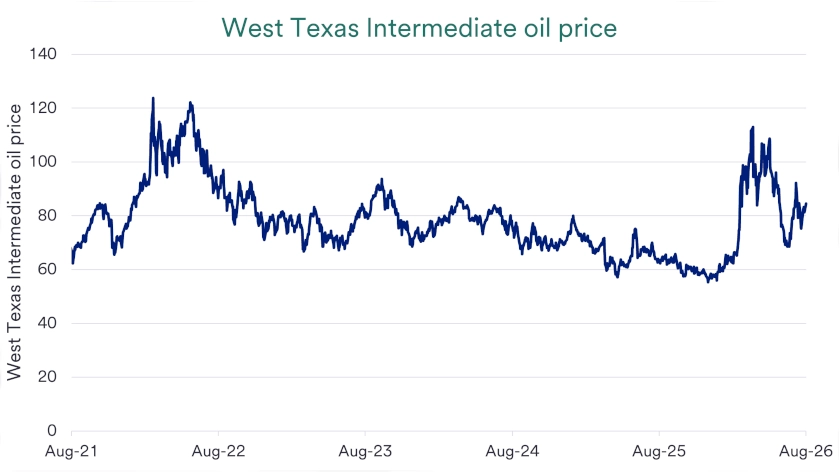
Inflation moderated further in July, although the monthly details remained uneven. Energy prices fell 1.5%, including a 2.9% decline in gasoline, while food prices rose 0.1% and shelter costs increased 0.1%. Energy still costs 14.7% more than a year earlier, led by a 24.6% increase in gasoline, so another oil-price increase could quickly reverse part of the improvement. 1
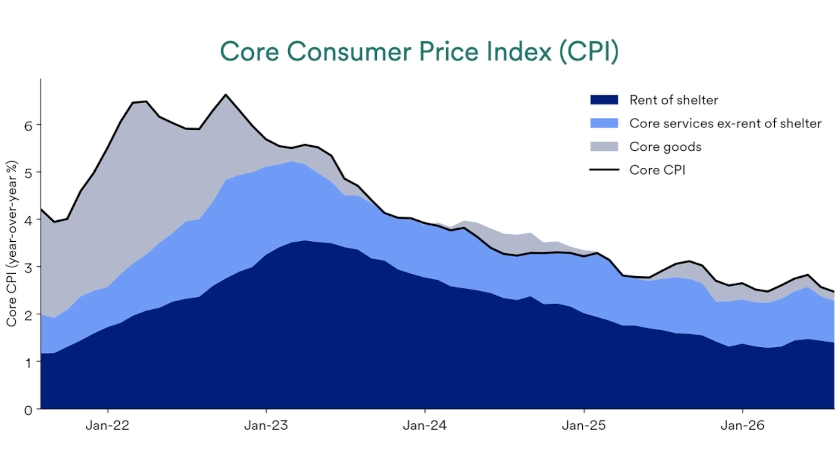
Core CPI removes food and energy, two categories that can move sharply from month to month, to clarify the broader price trend. Core prices rose 0.2% in July and 2.5% over the prior 12 months, easing from 2.6% in June. The decline supports the case that underlying inflation is slowing, but one report does not establish a durable trend. 1
Shelter accounts for roughly two-thirds of July’s monthly CPI increase and rose 3.2% from a year earlier. 1 Official shelter inflation often lags changes in the rental market because it measures total rents, rather than just changes in current lease rates. Slower market-rent growth can therefore take time to reach CPI, even after asking rents soften.
Home prices add a second housing signal. The S&P Cotality Case-Shiller U.S. National Home Price Index rose 1.1% in May from a year earlier, a much slower pace than official shelter inflation. 2 Together, softer home-price growth and the delayed transmission of rent changes suggest that housing could contribute less to inflation as newer transactions enter the data.
Geopolitical conflict can lift inflation by restricting energy supply and increasing transportation, shipping and insurance costs. Consumers first see the effect through gasoline and utility bills, while businesses also pay more to produce and deliver goods. A prolonged increase can slow economic growth because households and companies must redirect spending toward energy without receiving more goods or services in return.
“Markets are sensitive to sustained, accelerating inflation, but underlying inflation excluding energy has remained modest in recent months,” says Rob Haworth, senior investment strategy director with U.S. Bank Asset Management Group. “Recent labor market data have been encouraging, although meaningful labor-market weakness would raise the risk of a sharper economic slowdown.” His assessment argues for reading inflation, employment and growth together rather than treating one report as a complete market signal.
“Markets are sensitive to sustained, accelerating inflation, but underlying inflation excluding energy has remained modest in recent months. Recent labor market data have been encouraging, although meaningful labor-market weakness would raise the risk of a sharper economic slowdown.”
Rob Haworth, senior investment strategy director with U.S. Bank Asset Management Group
Tariffs create a separate inflation channel by increasing the cost of imported goods and production inputs. The Trump administration recently paused a proposed 50% Canadian tariff rate, while Treasury Secretary Scott Bessent indicated that tariffs imposed under Section 301 could ultimately match or exceed prior-year levels. The timing and scope remain fluid, so investors should focus on the duties that take effect and how businesses respond rather than on initial announcements alone.
The effective tariff rate compares customs revenue with the value of imported goods and offers a broad measure of tariff costs entering the economy. June data showed tariff refunds far exceeded tariff payments, temporarily lowering the measured rate, but we anticipate refunds will be short-lived. Companies can absorb tariffs, pass them to consumers or shift suppliers, which spreads the impact across prices, profit margins and economic activity with different delays.
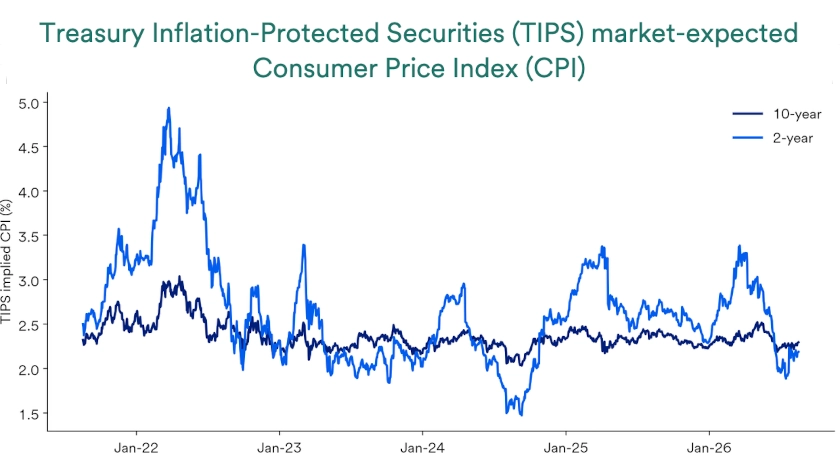
Market pricing points to less inflation concern than the earlier energy shock suggested. Treasury Inflation-Protected Securities, or TIPS, allow investors to estimate expected inflation by comparing their yields with those of conventional Treasury securities. This market-based measure reflects prices from ongoing bond market transactions and can adjust faster than many government reports.
“Capital markets can provide a valuable source of information about the outlook for inflation, because they often incorporate new information faster than lagging economic data or official forecasts,” says Bill Merz, head of capital markets research for U.S. Bank Asset Management Group. TIPS prices indicate that investors expect the energy disruption to remain contained, even though oil prices and tariff policy could still change that view.
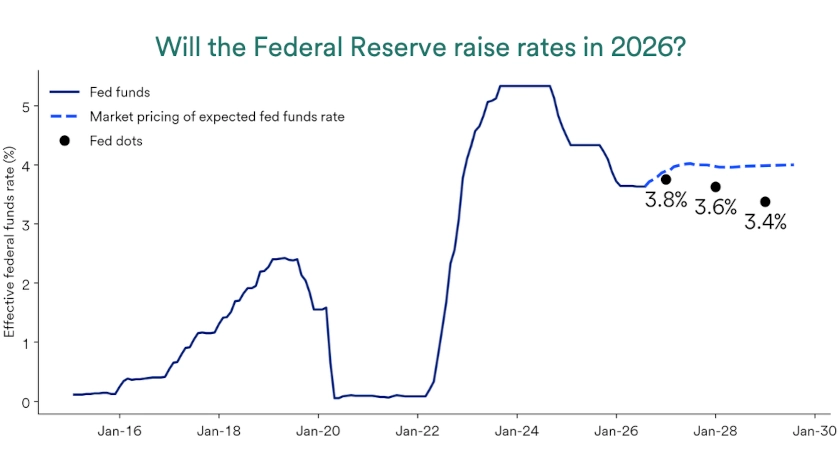
The Fed held the federal funds target range at 3.50% to 3.75% at its July 29 meeting, with nine officials supporting no change and three preferring a 0.25% increase. Stable employment and above-target inflation allow policymakers to keep their focus on price stability, while higher market interest rates have already tightened financial conditions. Markets shifted from anticipating rate cuts earlier in 2026 toward pricing one 0.25% increase by year-end, but incoming data can change that path.
The Fed aims for 2% inflation over the longer run as measured by the annual change in headline PCE, a broader gauge of consumer spending prices than CPI. Policymakers also study core PCE, which excludes food and energy, to judge the direction of underlying price pressure. Core PCE rose from 3.0% in December 2025 to 3.3% in June 2026, keeping the Fed cautious despite July’s softer CPI reading.
Investors should connect the inflation drivers rather than rely on a single monthly figure. Slower shelter inflation and lower energy prices could extend the moderation, while renewed oil pressure, firmer demand or higher effective tariffs could keep inflation elevated and prompt the Fed to hold rates higher or raise them. A diversified portfolio cannot prevent losses, but it can reduce dependence on one inflation or interest-rate outcome as policy, energy markets and business behavior reshape the outlook.
Inflation matters to investors because it can reduce the real value of portfolio growth over time. Even when an account balance rises, those gains may buy less if the cost of goods and services continues to increase. For long-term investors, the goal is not only to grow assets, but also to preserve purchasing power.
Inflation can also influence interest rates, which can affect both bonds and stocks. When rates move higher, older bonds with lower yields often lose value in the market. Higher rates can also weigh on stock prices by reducing the present value of future earnings. A diversified investment strategy can help investors manage these risks while staying focused on long-term growth.
Inflation reduces purchasing power by making everyday goods and services more expensive over time. As prices rise, each dollar buys less than it did before. This gradual change can affect household budgets, retirement planning, and long-term savings goals.
The long-term impact can be significant. Based on the Consumer Price Index from the U.S. Bureau of Labor Statistics, something that cost $1 at the start of 2000 cost about $1.93 by the start of 2026. That means prices nearly doubled over that period, showing why inflation remains an important part of financial planning and investment strategy.
Inflation explains the difference between nominal returns and real returns. A nominal return is the number shown on an investment statement, paycheck, or savings account. A real return adjusts for inflation and shows how much buying power increased after rising prices are considered.
For example, a bond may pay a 5% nominal yield over a year. If inflation averages 2% during that same period, the real return is closer to 3%. Investors track this difference because strong long-term results depend on growing wealth faster than the cost of living.
Many people notice inflation when prices jump in a given month or year. Investors usually focus on inflation as a long-term risk because prices tend to rise over time, even when inflation slows for a period. That steady increase can gradually reduce the future value of savings and investment gains.
For long-term investors, inflation is not just a short-term headline. It is an ongoing part of portfolio planning, retirement income planning, and wealth preservation. A sound investment approach aims to outpace inflation over time so investors can maintain spending power and stay on track toward long-term financial goals.
The best response to an uncertain inflation path is to stay focused on what you can control. Inflation remains a key driver of interest rates and market volatility, and tariffs and energy shocks can create short-term setbacks even when the longer-term trend is improving. A disciplined plan and a broadly diversified portfolio can help investors avoid making lasting decisions based on a single report or a short burst of volatility. That approach can keep long-term goals at the center of the plan.
If inflation continues to cool, especially if shelter inflation keeps easing with a lag, the case for lower rates can strengthen. If energy prices rise sharply or tariffs become more inflationary than expected, that timeline can shift. Talk with your financial professional about how your portfolio aligns with your goals, time horizon, and comfort with short‑term swings, and discuss whether any adjustments make sense for your situation.
In July 2026, CPI rose 0.1% for the month and 3.4% from a year earlier. The all-items rate eased from 3.5% in June, while core CPI slowed to 2.5% from 2.6%. 1 Household experiences can differ from the average because spending patterns vary and food, energy and housing prices do not move together.
Core inflation excludes food and energy because those prices can change sharply from month to month. Core CPI rose 0.2% in July and 2.5% over the prior year, helping investors and policymakers assess whether broader price pressure is easing. 1 The Fed still targets headline PCE inflation and uses core measures to evaluate where headline inflation may be heading.
The Fed defines its 2% longer-run inflation goal using the annual change in the headline PCE price index, not core PCE or CPI. 3 PCE covers a broader range of spending and adjusts as consumers change what they buy, while CPI tracks prices for a basket of consumer goods and services. The Fed reviews both reports and studies core readings to separate persistent pressure from short-term food and energy swings.
Federal Reserve calibrates monetary policy to help lower inflation.
We can partner with you to design an investment strategy that aligns with your goals and is able to weather all types of market cycles.



 Equal Housing Lender. Deposit products are offered by U.S. Bank National Association. Member FDIC. Mortgage, Home Equity and Credit products are offered by U.S. Bank National Association. Loan approval is subject to credit approval and program guidelines. Not all loan programs are available in all states for all loan amounts. Interest rates and program terms are subject to change without notice.